





For your convenience, if you prefer listening, you can listen to the rest of this article via the audio file below.
Why the Busbar Joint Face Gets Its Own Procedure
Busbar joint preparation earns its own procedure because the contact faces are the only bare metal left in an insulated busbar system. This kind of joint detail sits within the broader design principles covered in our guide to busbars for power distribution.
Sleeving runs along the conductors and a cover closes over the finished joint. Between them sits the one place where copper has to meet copper, and no insulation can help it.
ABB calls its busbar connections stabilized: the quality does not change with operating time, so nobody goes round retightening them on a schedule. Tightness gets checked during inspections instead, roughly every two to four years depending on service conditions. That claim only holds if the faces were prepared and the bolts torqued correctly on the first build.
Silver-Plated Contact Faces
On a silver-plated surface the plating is the contact layer, so ABB’s method lifts the dirt without working on the plating itself.
- Wipe the face with a metal-free non-woven cleaning cloth.
- Apply a thin, even coat of busbar contact grease. ABB specifies Isoflex Topas NB 52, or use the grease specified by your switchgear manufacturer.
Metal-free is the operative word. Anything abrasive works against the surface you are trying to keep, which is why ABB reserves the wire brush for unplated faces.
Emery cloth, abrasive pads and steel wool fall on the wrong side of that line, whatever else they are good for. The plating is thin, and once it is through, the face underneath is no longer the surface the joint was designed around.
Check what you actually have before you start. Plating is an order option on ABB main busbars and branches, silver or tin, so a bar is not plated simply because it looks bright.
If you are responsible for reporting, the full report contains all the supporting details you may need.
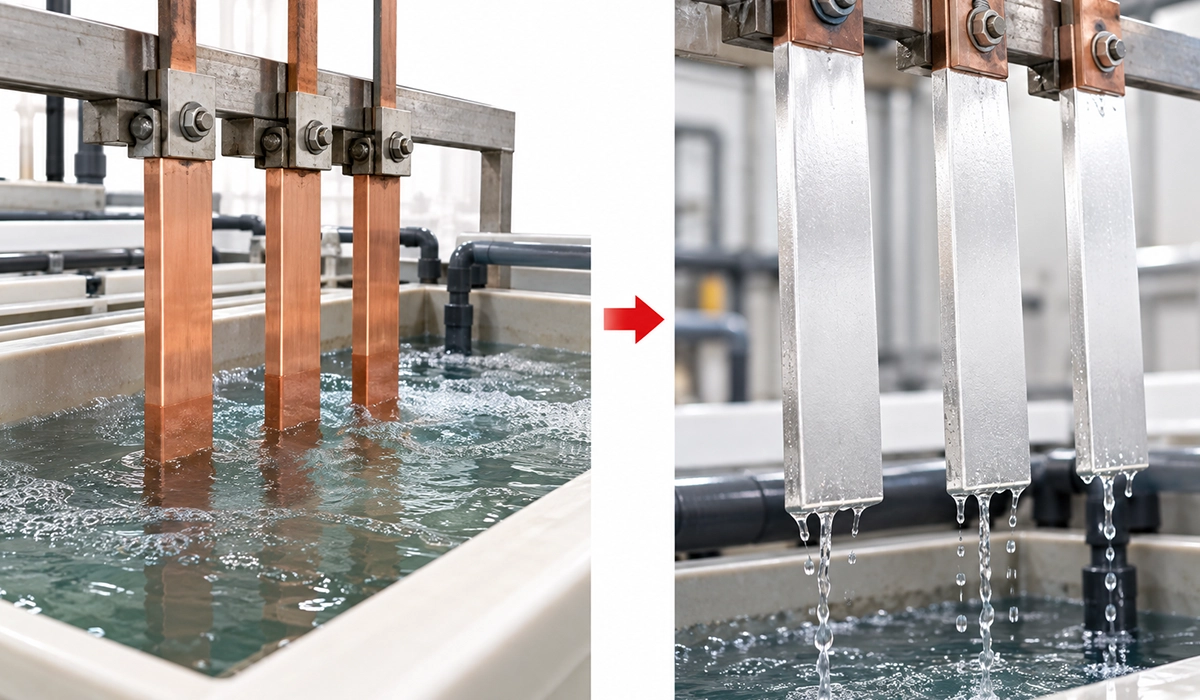
Whether a bar is plated at all is a specification decision made long before it reaches the panel. Our guide to silver-plated busbar covers that option.
Non-Silver-Plated Contact Faces
Bare copper gets a choice of two methods, and both finish with the same thin, even grease film.
- Brush the face with a wire brush under grease, keeping the grease in place as you work.
- Or clean the face with a metal-free cloth, then grease it evenly with a thin coat.
Readers who want the complete background will find much more explanation in the extended document.
Under grease is the part people skip. The brushing happens through the film, not on a dry face, so what comes loose stays in the grease instead of sitting on the contact.
| Contact face | Cleaning method | Wire brush | Grease |
|---|---|---|---|
| Silver-plated | Metal-free non-woven cloth | No | Thin, even coat |
| Non-plated copper | Wire brush under grease, or metal-free cloth | Only under grease | Thin, even coat |
Thin and even applies to both routes. ABB never asks for a thick layer anywhere in this procedure.
Getting this contact prep right is part of the larger job of fitting busbars correctly inside the panel. Our guide to busbars in electrical panels covers that broader context.
Cleaning Insulation and Removing Greasy Dirt
Busbar cleaning splits by what you are cleaning and how badly it is soiled. Do all of it on isolated and earthed equipment, following your site’s rules.
Insulating parts get a soft, dry cloth before installation, and a look for damage while you are there.
Loose dust comes off the same way. Stuck or greasy dirt needs a cloth soaked in a mildly alkaline household cleaner, then a wipe with clear water and careful drying.
For heavier work ABB names halogen-free cleaners: Rivolta BWR 210 for general cleaning, and cold cleanser 716 for conductive parts, insulating parts and heavy soiling. Follow the maker’s instructions for each, and keep cleaner away from a face you have already greased.
Three solvents are out: 1,1,1-trichloroethane, trichloroethylene and carbon tetrachloride. Two of them are internationally controlled substances, so the ban is not only ABB’s.
Keeping contact faces this clean matters most at the exact points where two conductors actually terminate together. Our guide to terminal bus bars covers that connection point.
The Re-Grease Rule and the Torque Mix-Up
Busbar joint preparation is not a one-time job. ABB asks you to clean and grease the contact faces again after any dismantling of the busbars.
Take a joint apart to move a panel, change a bar or reach something behind it, and the faces go back to step one. A face that has been opened, handled and reassembled is not the face that was prepared on the first build.
Now the mix-up. ABB’s torque table carries a dry column and a lubricated column, and lubricated there means the bolt thread and the head contact surface. It does not mean the busbar faces. Greasing the busbar faces, which this procedure requires anyway, does not on its own move a joint into the lubricated column.
Thread lubrication and tightening torque belong to their own article.
A joint prepared and torqued correctly still has to survive a real fault event, which is a separate mechanical question. Our guide to busbar short-circuit withstand covers that requirement.
Conclusion about busbar joint preparation
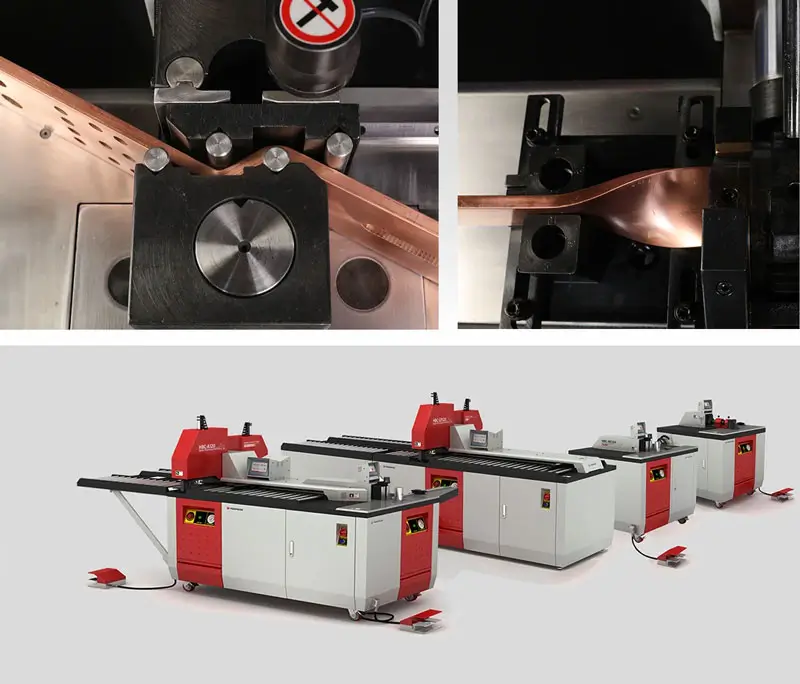
Busbar joint preparation starts before the grease. A face can only be cleaned flat if the bar arrived flat, cut and punched to drawing.
A flat, properly prepared face starts with how the bar was cut and bent in the first place. Our guide to copper busbar bending covers that fabrication step.



Rate this article
Choose a rating from 1 to 5 stars.
No ratings yet