




If you’d rather listen than read, feel free to play the audio file below for the rest of this article.
What Switchgear Makers Actually Offer
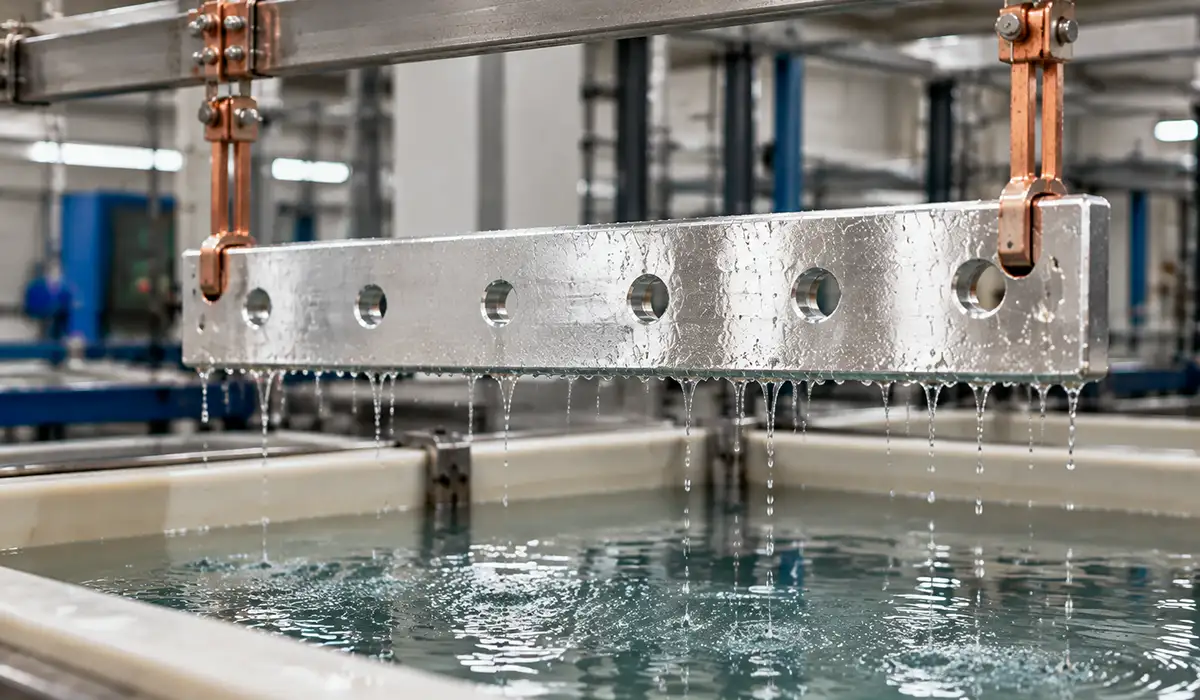
In ABB’s UniGear range, plating is an order option rather than a default: the main busbar system and its branches can be silver-plated or tinned on request.
Bare copper is the starting point; a tinned copper busbar, like a silver-plated one, has to be asked for.
Insulating covering is a separate choice. ABB supplies it at 17.5 kV and 24 kV, and on request at 12 kV. Covering answers an insulation question; plating answers a contact-surface one.
Conductor material varies too. ABB’s UniGear guide specifies copper, while its 2001 ZS1 manual gives the busbars in copper or aluminium.
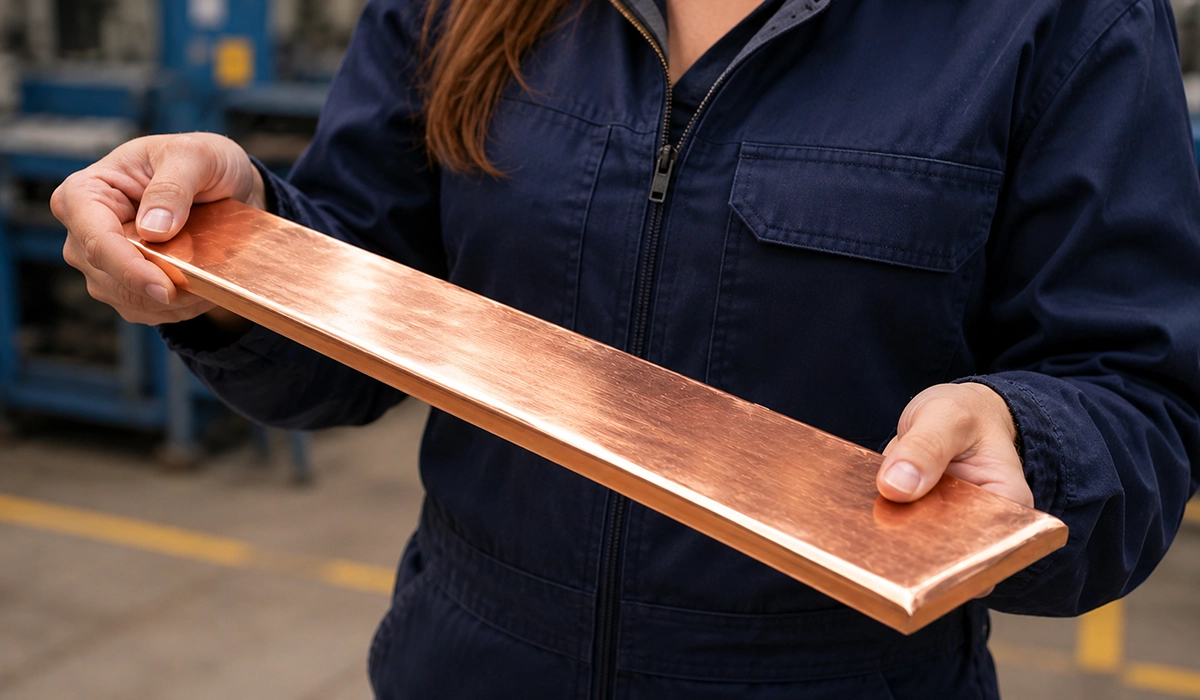
On projects, the costly assumption is that a bright bar must be plated. It may simply be clean copper. If the order does not state silver or tin, nobody should treat the bar as either.
Finish is only one property of a bar, and it makes more sense once the basics are clear. Our guide to busbar fundamentals covers what a busbar does and how it is built.
Silver Plated Busbar Surfaces
A silver-plated contact face gets one preparation method in ABB’s ZS1 manual: wipe it with a metal-free non-woven cloth, then apply a thin, even coat of the specified contact grease.
No abrasive appears anywhere in that method. The plating is the contact surface, so the aim is to clean it without wearing it away. On site, that means abrasive pads and wire brushes stay away from any bar the order marks as silver-plated.
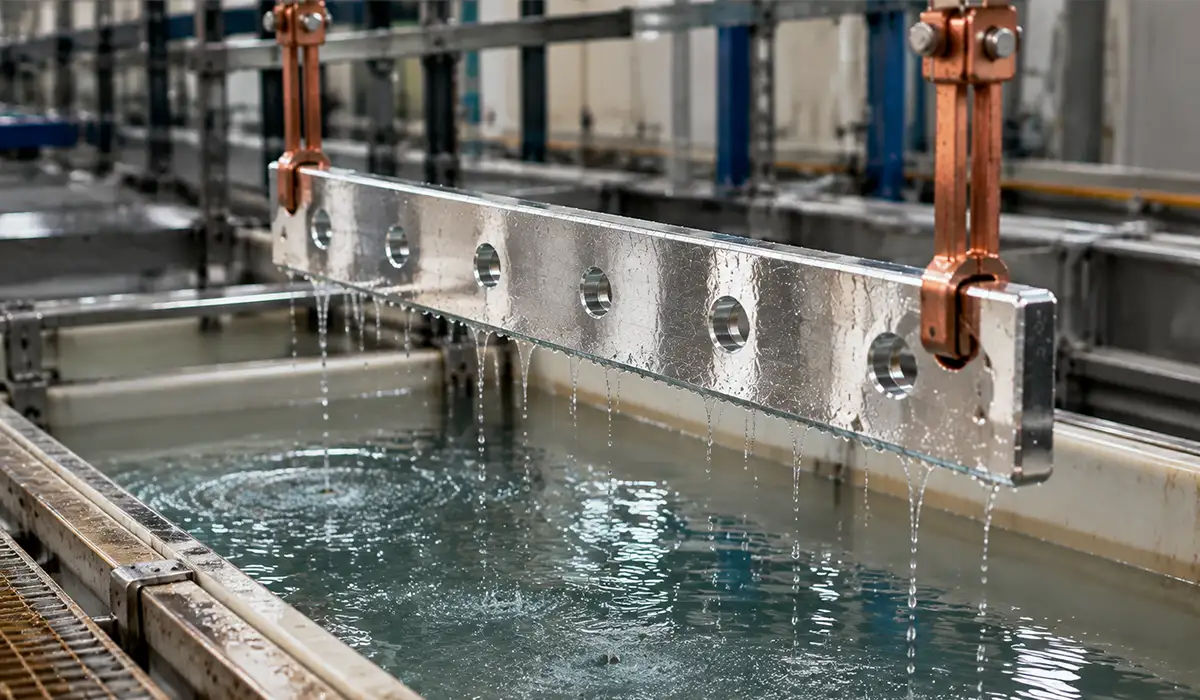
ABB’s ZS3.2 manual adds a wear rule for silver, but it covers isolating contact parts, not busbars. Once the galvanic silver coating wears far enough for copper to show underneath, those parts are replaced. Heavy corrosion or a discoloured surface calls for the same.
Nothing equivalent appears for plated busbar faces in these manuals. Don’t stretch the contact-part rule to cover a bar.
If you are responsible for reporting, the full report contains all the supporting details you may need.
Contact faces matter most at the points where conductors are joined and terminated. For that side of the topic, see our guide to the terminal bus bar.
Tin Plated and Bare Copper Surfaces
ABB gives no separate rule for a tin plated busbar. Its ZS1 manual sorts every face that is not silver-plated into one group, and that group gets a choice of two methods.
Either brush the face with a wire brush under grease, keeping the film intact, or clean it with a metal-free cloth. Both routes finish with a thin, even coat of grease.
So a tinned copper busbar and a bare one meet the same instruction at assembly. The wire brush is permitted, not required; the cloth route is equally within ABB’s wording. If your switchgear maker’s documents give a tin-specific method, follow theirs; ABB’s do not.
| Contact face | ABB grouping | Cleaning | Wire brush |
|---|---|---|---|
| Silver-plated | Silver-plated | Metal-free non-woven cloth | No |
| Tinned | Non-silver-plated | Wire brush under grease, or metal-free cloth | Permitted, under grease |
| Bare copper | Non-silver-plated | Wire brush under grease, or metal-free cloth | Permitted, under grease |
Surface finish is one of several decisions made when a bar is specified. Our busbar selection guide walks through the others for low-voltage panels.
What Changes on the Shop Floor
Two things change on the shop floor: which faces may touch a wire brush, and when the finish has to be known.
The first is handling. Silver-plated faces are never abraded; ABB keeps the wire brush for non-silver-plated faces, under grease only. The full cleaning and greasing method has its own article.
The second is timing. Plating is decided when the switchgear is ordered, so the drawing must state the finish before any bar is cut, punched or bent. If it is silent, stop and ask; nobody adds plating at the assembly bench.
Mark plated bars at every stage so the finish is still obvious at assembly.
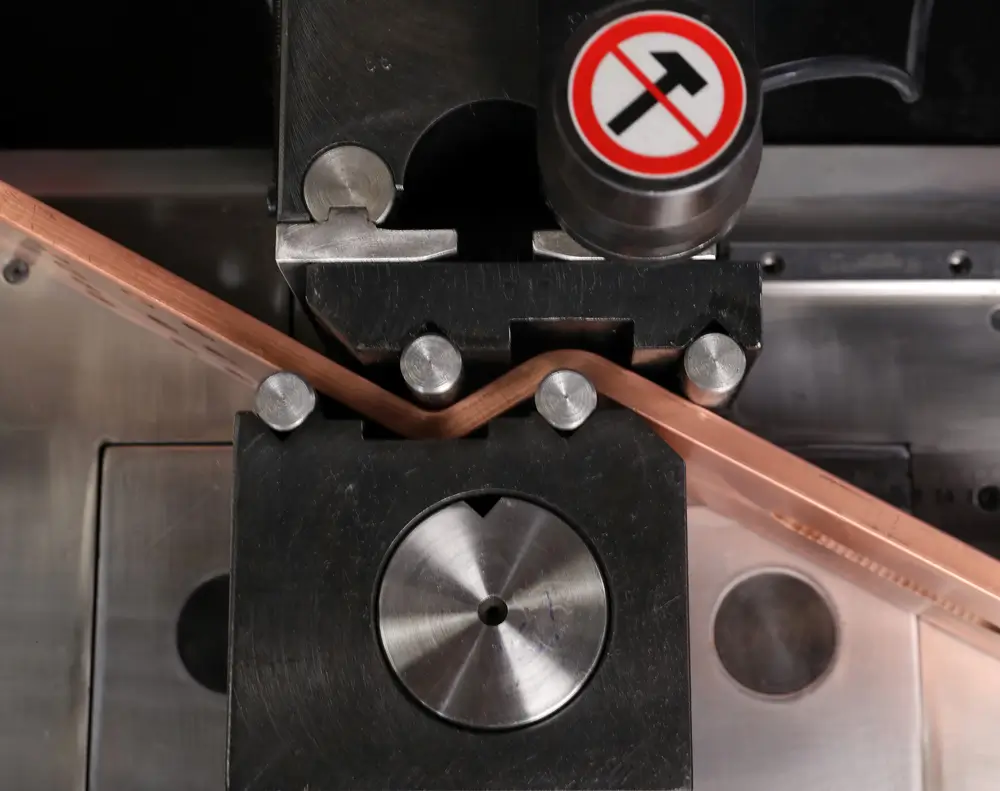
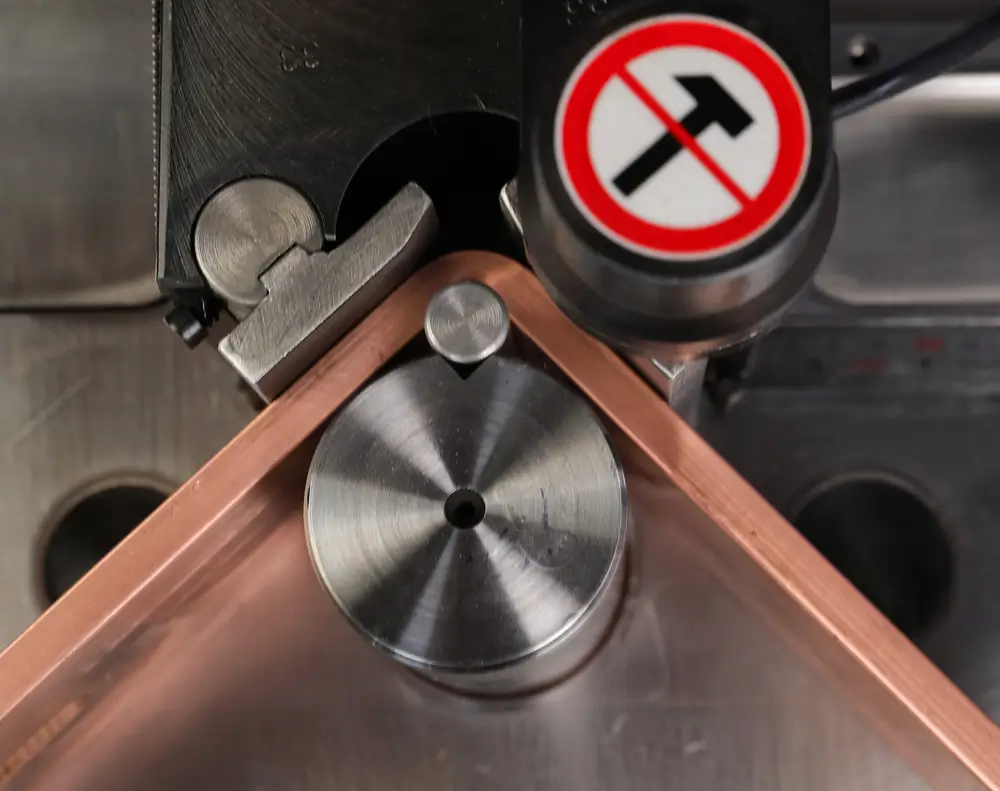
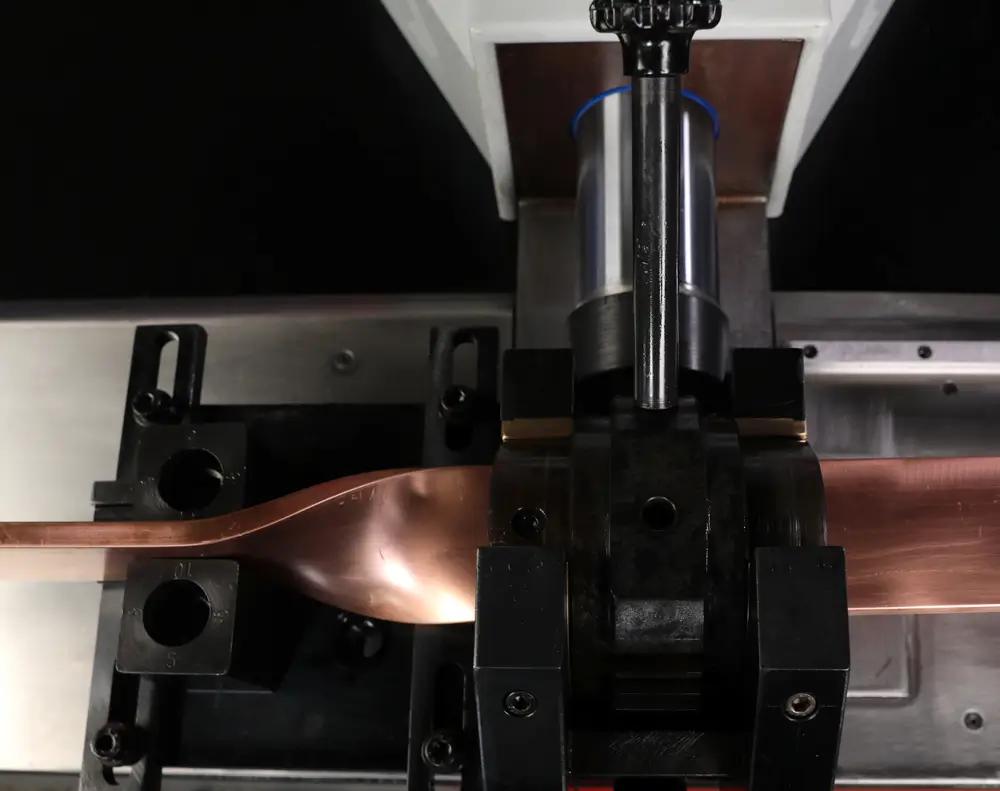
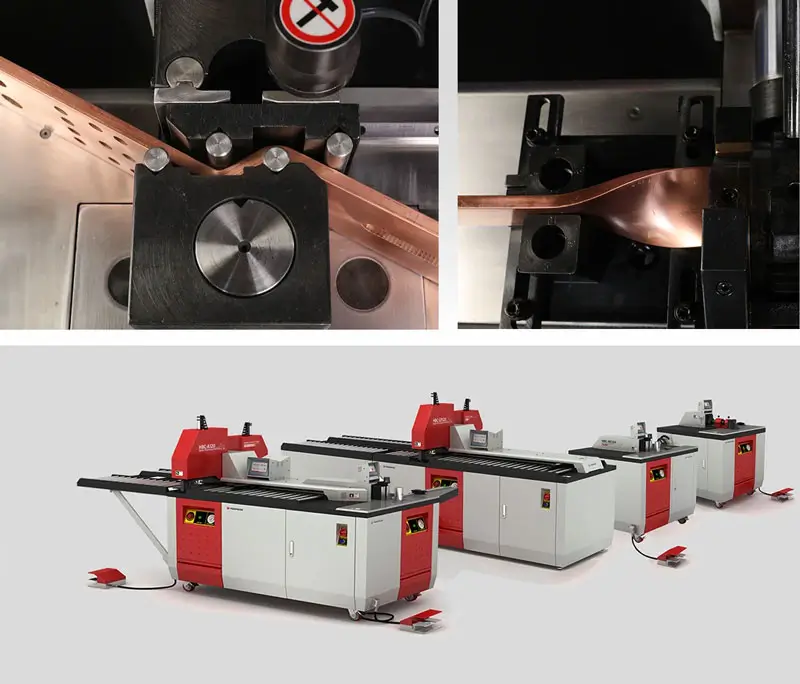
Once the finish is confirmed, the bar still has to be cut, punched and bent to size. Our article on copper busbar bending shows how to calculate the bend before the bar reaches the machine.
What the ABB Sources Do Not Say
The three ABB documents behind this article contain no performance comparison between finishes: nothing on how bare, tinned and silver-plated bars differ in conductivity, contact resistance, corrosion or cost.
They tell you which finishes exist and how each face is handled, and they stop there. So the choice follows the switchgear order specification, not a general rule. Supplier pages that rank the finishes may be right or wrong; these manuals neither confirm nor contradict them. Where performance limits matter, the governing standards and the switchgear maker’s own design data decide.
Current rating is one of those questions that belongs to standards and design data, not to a finish comparison. Our guide to busbar sizing explains how a bar’s cross-section is chosen.
Conclusion about Tinned Copper Busbar Finishes
A tinned copper busbar, a silver-plated bar and a bare one can look alike on the bench, yet they differ in two places: on the order and at the contact face. Plating is something the order asks for, so a bright bar proves nothing on its own.
At assembly, ABB draws one firm line. Silver-plated faces are cleaned with a metal-free cloth and never abraded, while a tinned copper busbar and bare copper share the same method: a cloth, or a wire brush under grease.
So the practical step comes early. State the finish on the drawing before any bar is cut, punched or bent, and mark plated bars so nobody has to guess later. Once the finish is fixed.
Finish is one detail in a much larger system. For the full picture, read our complete guide to electrical busbars in power distribution systems.

Rate this article
Choose a rating from 1 to 5 stars.
No ratings yet