


If you’d rather listen than read, feel free to play the audio file below for the rest of this article.
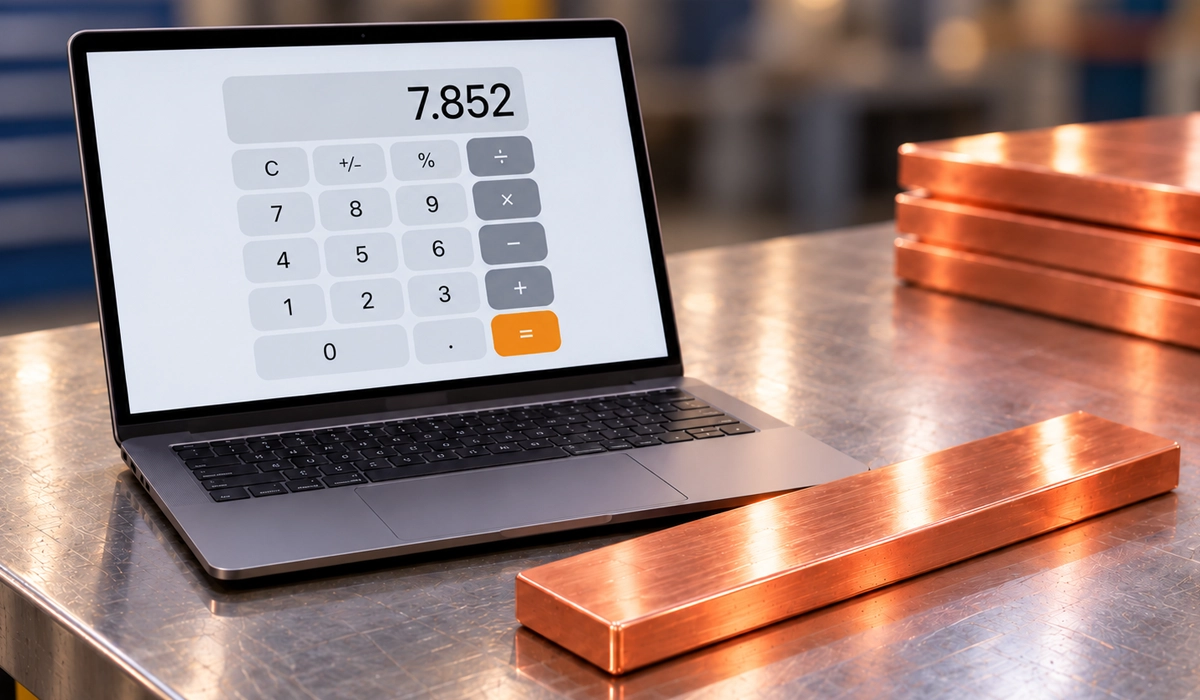
Copper Weight Calculator
Use the copper weight calculator in three steps:
- Pick a shape: busbar, rod, tube, sheet, wire.
- Enter the size; the form takes millimeters and inches.
- Read the weight in kg and lb.
It also works as a copper bar weight calculator and copper sheet weight calculator. Results assume the selected grade’s density and exclude insulation and plating.
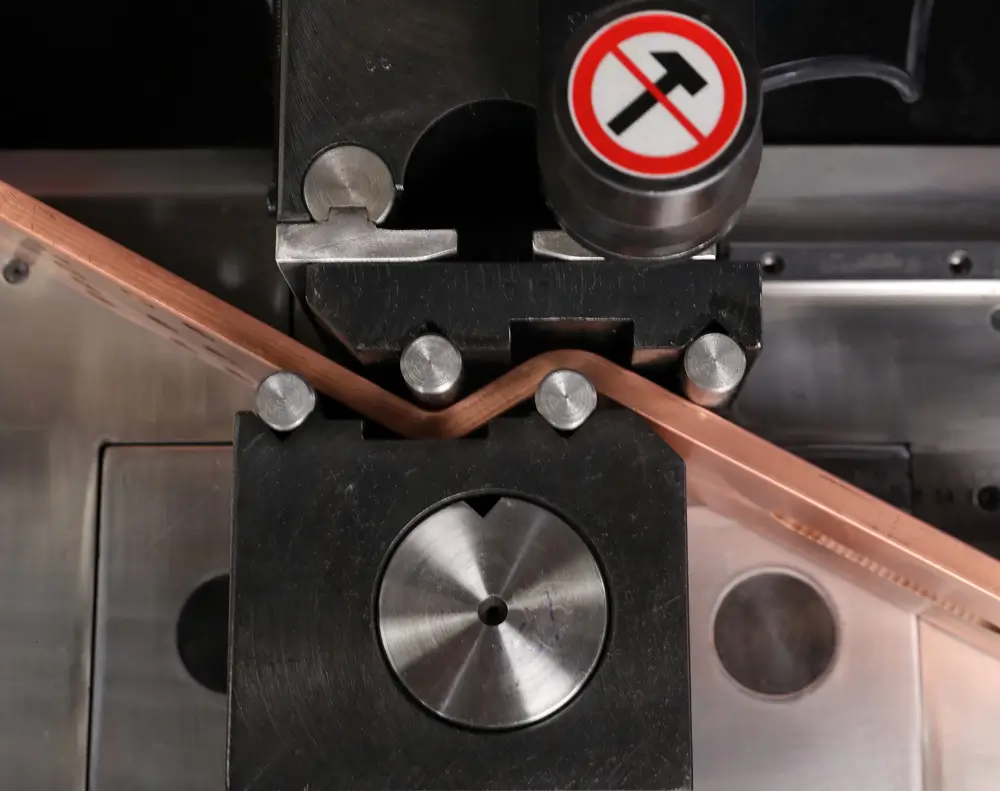
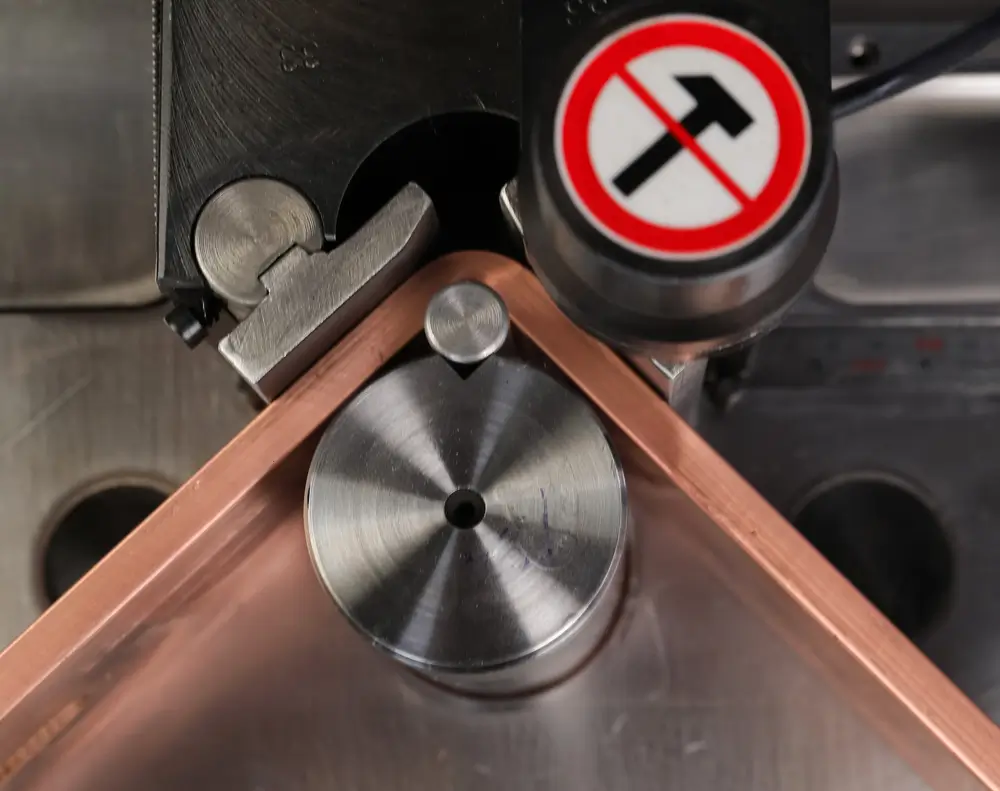
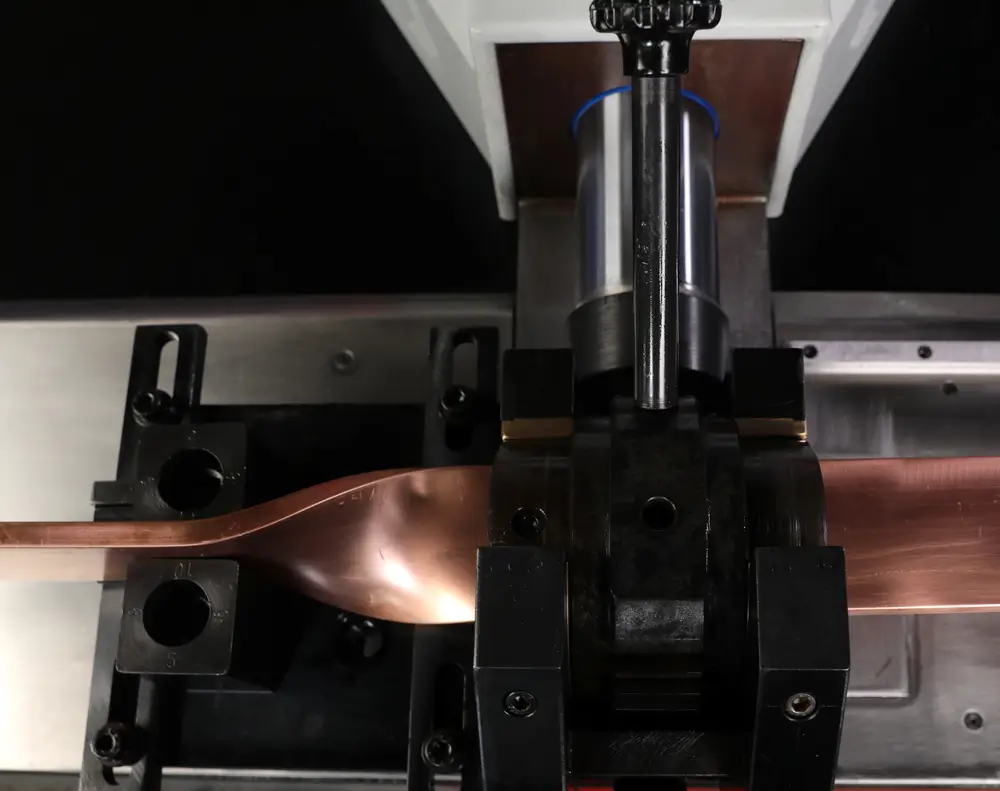
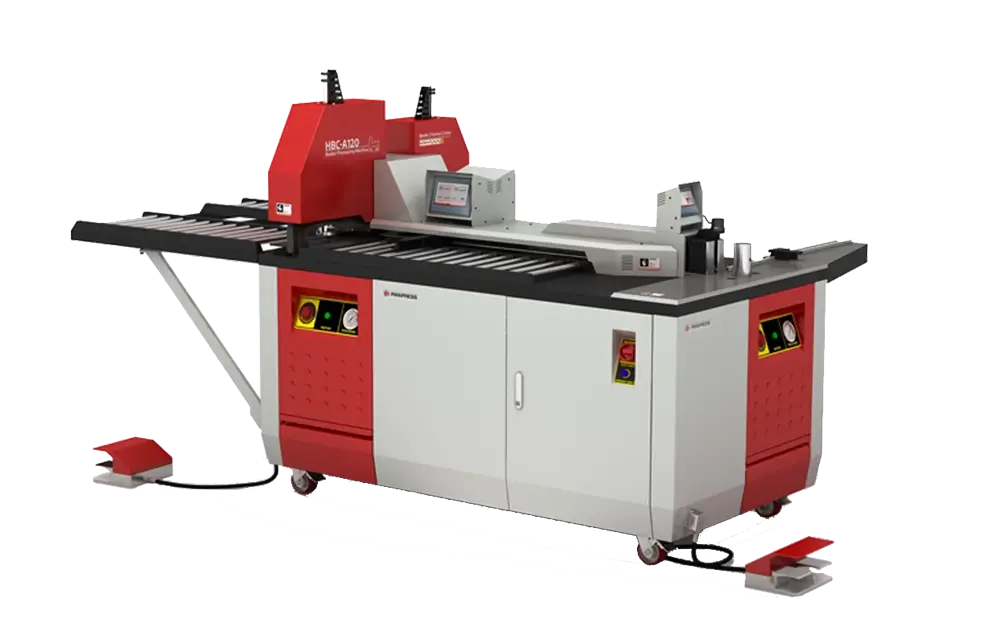
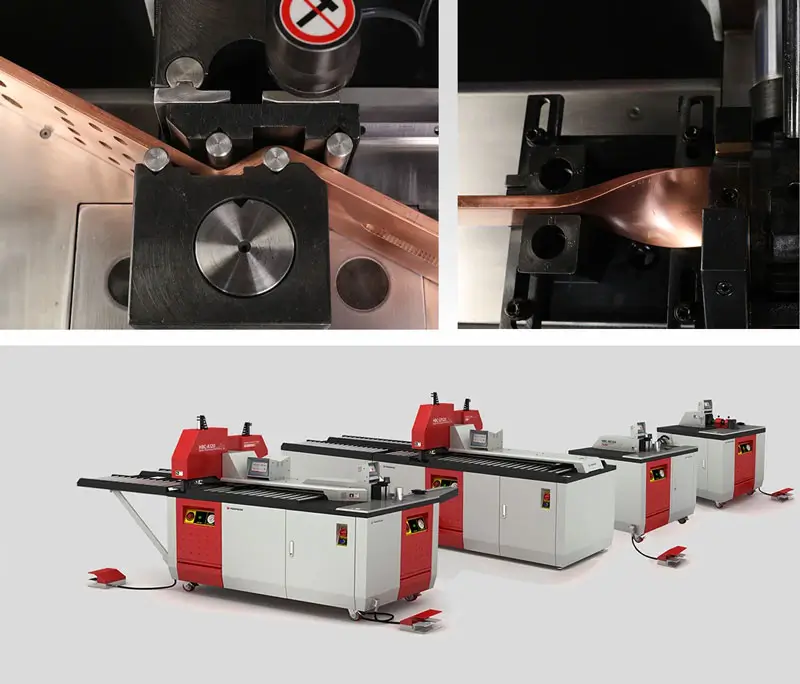
Designed for demanding busbar fabrication, the HBC-A160 machine processes copper and aluminum busbars up to 160 × 15 mm. Its independent cutting, punching, and bending stations support efficient production with accurate positioning.
How to Calculate the Weight of Copper
How to calculate the weight of copper? Multiply the cross-sectional area by the length and the density:
Weight = cross-sectional area × length × density (W = A × L × ρ)
Keep the units consistent throughout. In metric, convert millimeters to meters first and use the density of copper, 8.89 g/cm³ or 8,890 kg/m³. In imperial, work in inches, so the volume comes out in in³, then multiply by 0.321 lb/in³ to get pounds. For example, 1,000 mm² equals 0.001 m², and one foot equals 12 inches.
To see where these conductors fit in a modern facility, read our guide to electrical busbars. Knowing the weight of each bar helps you plan orders and handling before production starts.
Copper Busbar and Flat Bar Formula
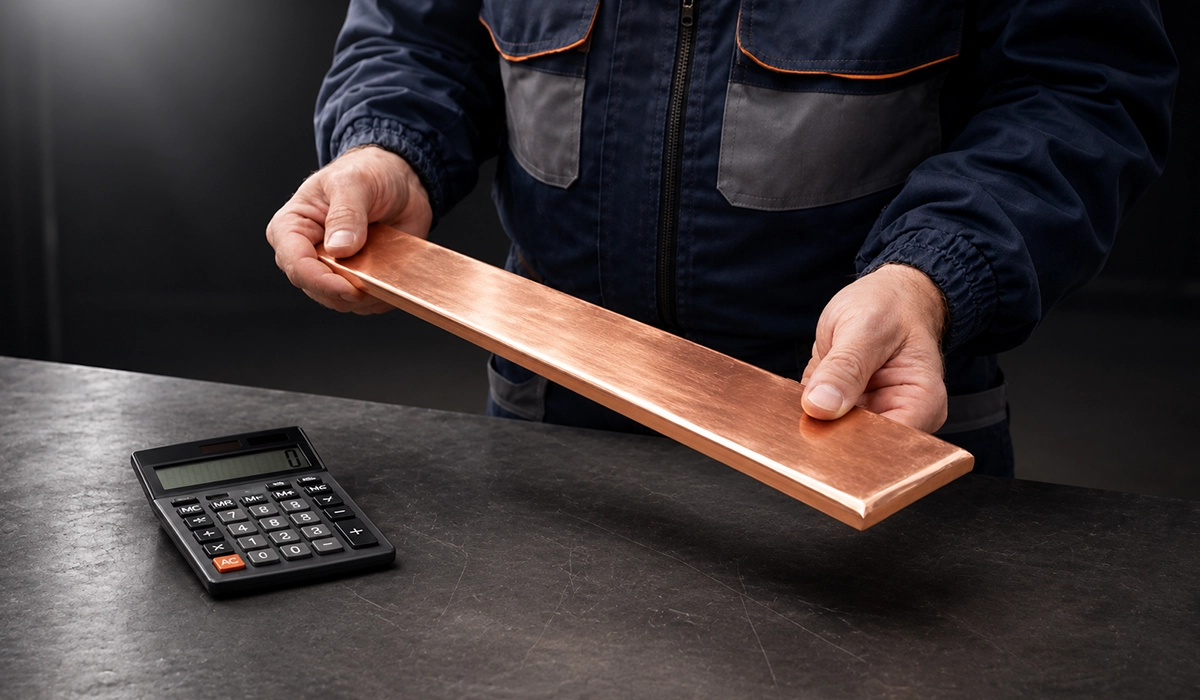
For a flat bar, volume equals width × thickness × length. Therefore, weight per meter equals width × thickness × density, which gives the copper busbar weight per meter directly.
For example, a 100 × 10 mm C11000 bar has an area of 1,000 mm², or 0.001 m². Over 1 m, that is 0.001 m³ × 8,890 kg/m³ = 8.89 kg/m (computed). A standard 6 m length therefore weighs about 53 kg.
In inches, a 1/4 × 2 in bar holds 0.5 in² × 12 in = 6 in³ per foot. At 0.321 lb/in³, it weighs 1.93 lb/ft (computed). Finally, multiply by the number of bars and the bar length to get the order total.
Unit mix-ups cause most weight errors, so use exact factors. NIST lists the exact foot-to-meter factor in its SI conversion guide.
Round Rod and Tube Formula
A copper rod weight calculator uses the circle area: W = π/4 × d² × L × ρ. For example, a 25 mm rod has 490.9 mm² of copper, so it weighs about 4.36 kg/m (computed). In inches, a 1 in rod weighs about 3.03 lb/ft (computed).
A copper pipe weight calculator subtracts the bore: W = π/4 × (OD² − ID²) × L × ρ, where ID = OD − 2 × tube wall thickness. For example, a 22 mm tube with a 1 mm wall weighs about 0.59 kg/m (computed). Likewise, a 1 in tube with a 0.1 in wall weighs about 1.09 lb/ft.
Copper Wire Weight by Gauge
A copper wire weight calculator starts from the conductor area. AWG covers small wire, while kcmil (MCM) covers large cable. As a copper weight per foot calculator, the tool converts each size to mm², then multiplies by length and density.
The 600 MCM copper weight per foot is about 1.82 lb (304.0 mm², computed). How much does 500 MCM copper weight per foot come to? About 1.51 lb (253.4 mm², computed). As a copper wire weight per meter calculator, it shows 2.25 and 2.70 kg/m for those sizes.
These figures assume a solid bare conductor. Solid vs stranded cable differs slightly, while bare vs insulated cable differs a lot.
Weight is only one part of choosing a conductor, since current rating sets the real size, as explained in our busbar sizing guide. Bent bars also need extra length, so add an allowance to the cut length.
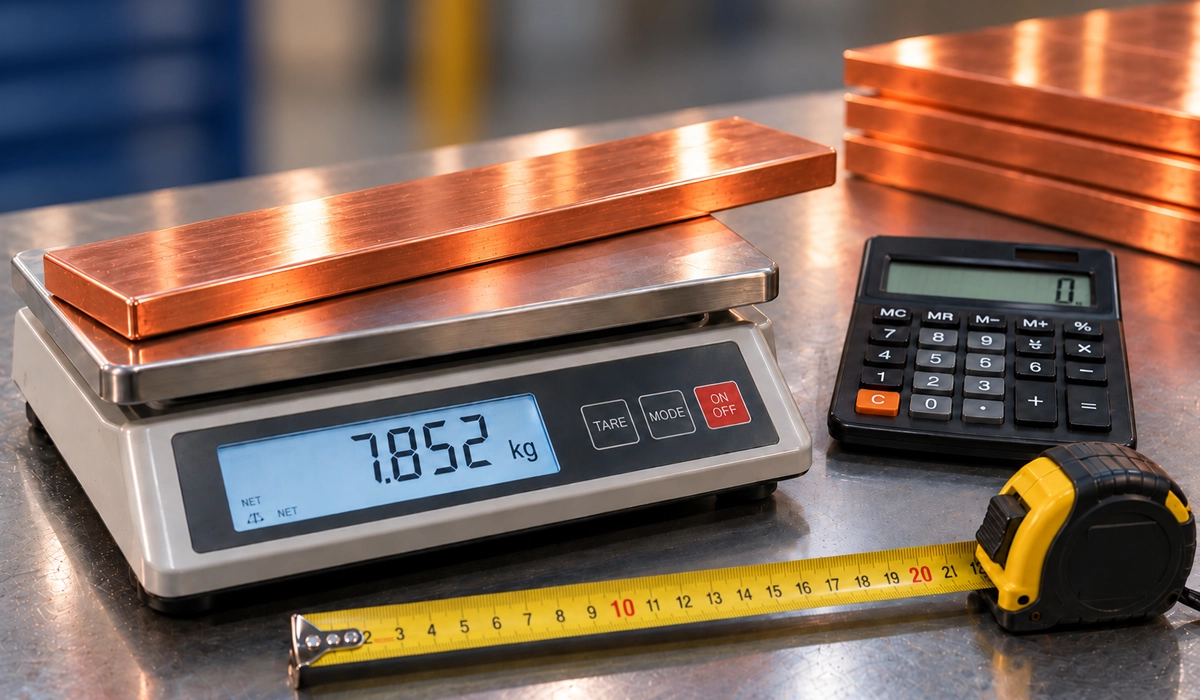
Copper Busbar Weight Chart (kg/m and lb/ft)
This copper flat bar weight chart covers the calculator presets. Metric values use kg/m = W × T × 0.00889, with W and T in mm, at 8.89 g/cm³.
| Size (mm) | kg/m |
|---|---|
| 20 × 5 | 0.89 |
| 30 × 5 | 1.33 |
| 40 × 10 | 3.56 |
| 60 × 10 | 5.33 |
| 80 × 10 | 7.11 |
| 100 × 10 | 8.89 |
| 120 × 10 | 10.67 |
Imperial values use lb/ft = W × T × 12 × 0.321, with W and T in inches. All values are nominal and computed for bare C11000 copper, without plating.
| Size (in) | lb/ft |
|---|---|
| 1/4 × 1 | 0.96 |
| 1/4 × 2 | 1.93 |
| 1/4 × 4 | 3.85 |
| 3/8 × 4 | 5.78 |
| 1/2 × 4 | 7.70 |
Mill tolerances on width and thickness apply, so real bars can weigh slightly more or less. ASTM B187 sets thickness, width and edge requirements for copper bus bar in its bus bar specification.
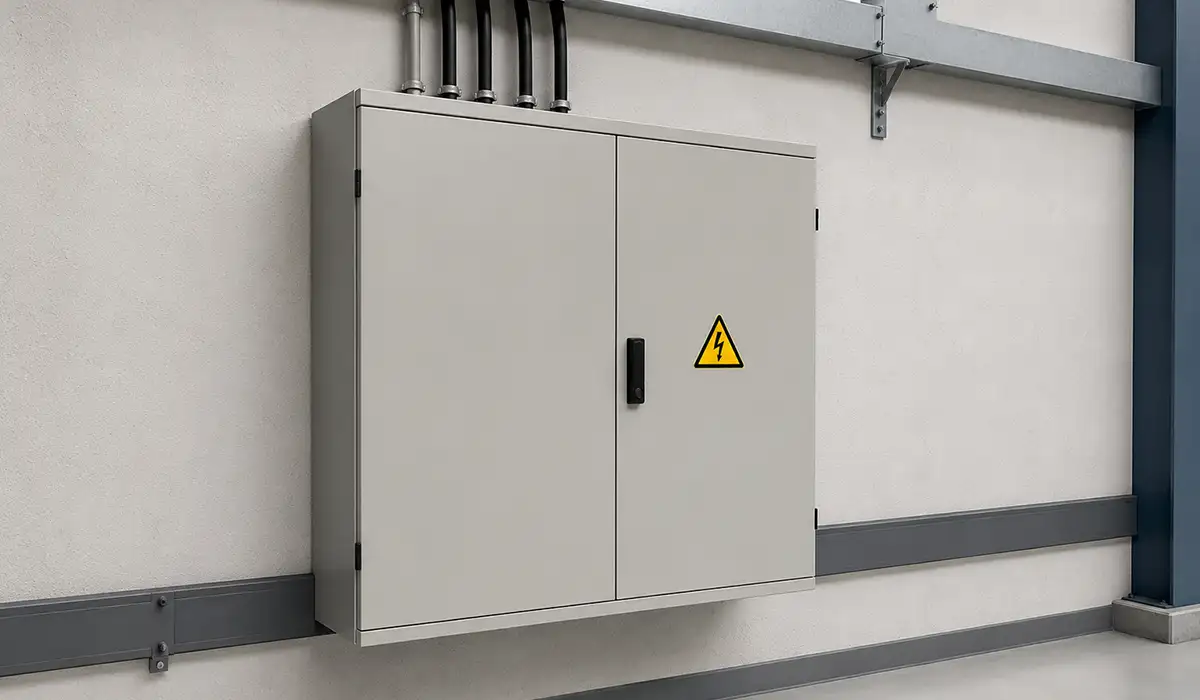
Most of the sizes in this chart are used as LV panel busbars in switchgear and distribution boards. To turn weight into a purchase budget, multiply it by the current copper price.
Density of Copper Grades
What is the density of copper? For busbar grades, it sits close to 8.9 g/cm³, depending on grade and purity.
| Grade | g/cm³ | lb/in³ |
|---|---|---|
| C11000 (ETP) | 8.89 | 0.321 |
| C10100 (OFE) | 8.94 | 0.323 |
| Aluminum 6101 (comparison) | 2.70 | 0.098 |
In short, C11000 vs C10100 changes weight by less than 1 percent, which rarely matters for quotes. Copper vs aluminum, however, changes it by more than three times. For grade details and uses, read our copper grades guide.
Oxygen-free grades run slightly denser than ETP copper. The Copper Development Association lists C10100 at 0.323 lb/in³ in its C10100 alloy data.
Plating adds a thin layer on top of the base copper, so see our silver plated busbar page for when it is worth the cost. Mass also affects mechanical performance, so check bar strength before finalizing a design.
Why Busbar Weight Matters in a Panel Shop
Weight drives three daily decisions in a panel shop:
- Cost estimating: material cost equals weight × the current copper price, and the same weight sets scrap value for offcuts.
- Handling and shipping weight: a 6 m length of 100 × 10 mm bar weighs about 53 kg, so long bars need two people or a lift.
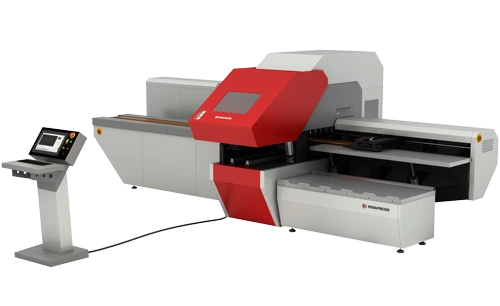
- Machine loading: busbar machines have loading tables and roller beds with weight limits, so check the heaviest bar you plan to run before buying.
For the bigger picture on copper, see our copper busbar guide. Before buying equipment, read our CNC busbar machine buying guide.
Long bars push manual handling close to safe limits. NIOSH explains how load, distance and posture set safe two-handed lifting in its lifting equation guide.
Heavy bars also have to be laid out with safe spacing, so review the rules on busbar clearances before fabrication. They also need solid supports along their full length.
Conclusion: Copper Weight Calculator
Bookmark this copper weight calculator and use it for every quote, order and shipment you prepare. It handles busbar, rod, tube, sheet and wire in metric vs imperial units, and the formulas above let you check each result by hand. For copper properties, grades and current ratings, see our copper busbar guide and busbar calculator.
Before you finalize any design, confirm that your bars meet the relevant busbar standards. When fabrication starts, follow the minimum bend radii for your bar size.
Frequently Asked Questions about Copper Weight Calculator
Many readers also ask how bars are run through a building, which is covered in our busbar trunking article. The answers below cover the most common weight questions.


Rate this article
Choose a rating from 1 to 5 stars.
No ratings yet