


What Is an Arc Fault — and Why Can’t a Standard Breaker Stop It?
An arc fault is an unintended electrical discharge through ionized air — plasma — bridging a gap between conductors or across damaged insulation. Once the arc strikes, plasma temperatures exceed 5,000°C (9,032°F) in a region the size of a pinhead. That energy density easily ignites wood framing, paper-faced drywall, dust, and degraded insulation, yet the total current drawn by the arc often sits below 5 amps. A 20-amp thermal-magnetic breaker sees nothing remarkable. It trips on overcurrent and short circuit; it has no mechanism to recognize the irregular, high-frequency electrical signature of an arc. Standard breakers detect roughly normal-band overcurrent within seconds and dead-short current within cycles — they do not see the chaotic micro-events of arcing at normal load levels.
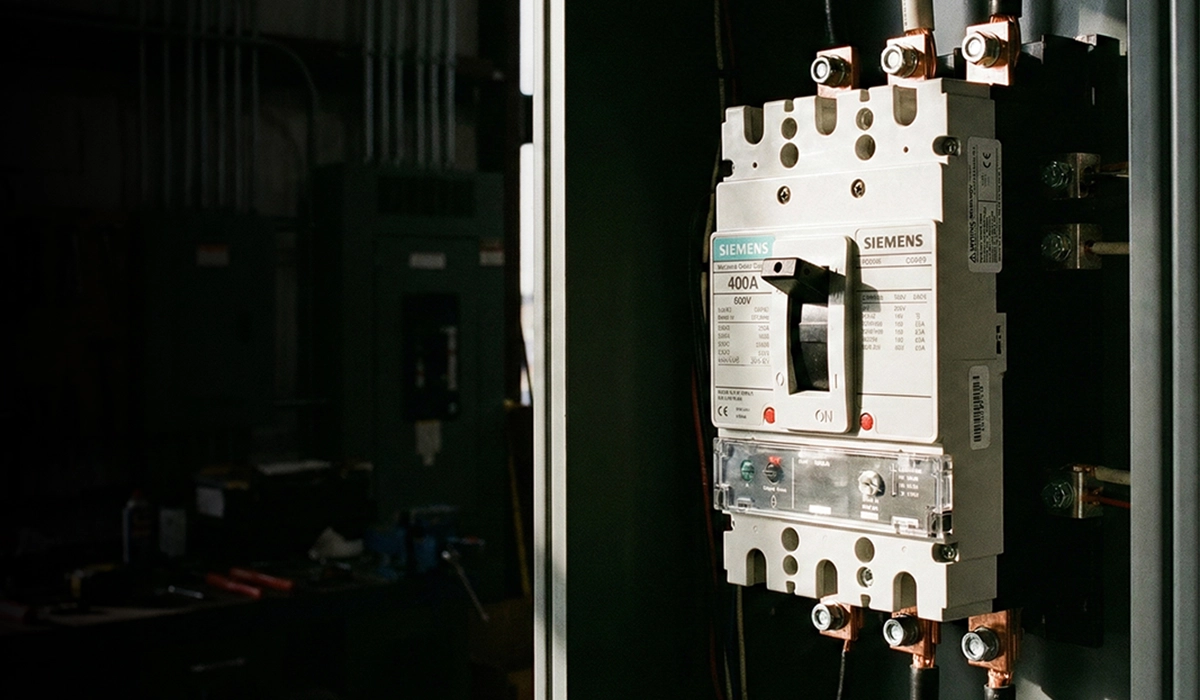
This is the gap an arc fault circuit breaker fills as an arc fault protection device. NFPA 921 fire investigators identify arc-damaged conductors as a leading evidentiary marker in residential electrical fires. The hazard is not theoretical: damaged extension cords pinched under furniture, staple-perforated NM cable behind walls, and over-torqued terminal screws on receptacles all generate the conditions for series or parallel arcing under everyday loads.
The Two Primary Types of Arc Faults — Series and Parallel
A series arc fault sits in line with the load — typically a loose wire connection, a nicked conductor inside a cable jacket, or a corroded terminal. An arc fault circuit interrupter is engineered specifically to recognize these series events, which are otherwise invisible to overcurrent protection. Because the arc is in series, the current it carries cannot exceed the load’s normal draw. A laptop charger pulling 0.5 amps through an arcing terminal still draws 0.5 amps; the breaker sees a normal circuit. A parallel arc fault, by contrast, occurs between two conductors — line-to-neutral, line-to-ground, or line-to-line — typically from compromised insulation. It can spike current well above normal, but the arc impedance often keeps it below the breaker’s instantaneous trip threshold.
Table 1: Series vs Parallel Arc Fault — Technical Comparison
| Parameter | Series Arc Fault | Parallel Arc Fault |
|---|---|---|
| Circuit position | In series with the load conductor | Between two conductors (L-N, L-G, or L-L) |
| Typical cause | Loose/damaged connections, nicked conductors, terminal corrosion | Insulation breakdown, damaged cable, pinched wiring |
| Current level | At or below normal load current | May spike above normal but often below breaker trip threshold |
| Standard breaker detection | Not detectable — no overcurrent signature | Rarely detectable — current may not exceed threshold |
| AFCI detection | Yes — via arc signature pattern recognition (DSP) | Yes — via arc signature plus overcurrent monitoring |
| Fire risk level | High — smoldering ignition risk inside walls | High — rapid ignition, higher energy release |
| Typical locations | Outlet wiring, junction box terminals, behind wall boxes | Damaged cable runs, pinched wiring under flooring/behind walls |
Arc Fault vs Arc Flash vs Arc-Tolerant Switchgear: Three Different Things
Three terms get used interchangeably and shouldn’t be. They describe different energy levels, different equipment, and different standards — and specifying the wrong one is an expensive mistake.
An arc fault is a low-energy discharge in branch wiring — often under 5 A — that creates a fire risk. The protective device is an AFCI, and the standard is UL 1699 in North America or IEC 62606 internationally.
An arc flash is a high-energy explosive discharge in distribution equipment that creates blast, thermal and pressure hazards to personnel. It is managed through incident-energy analysis, PPE selection and protection coordination under IEEE 1584 and NFPA 70E. No AFCI is involved at any point.
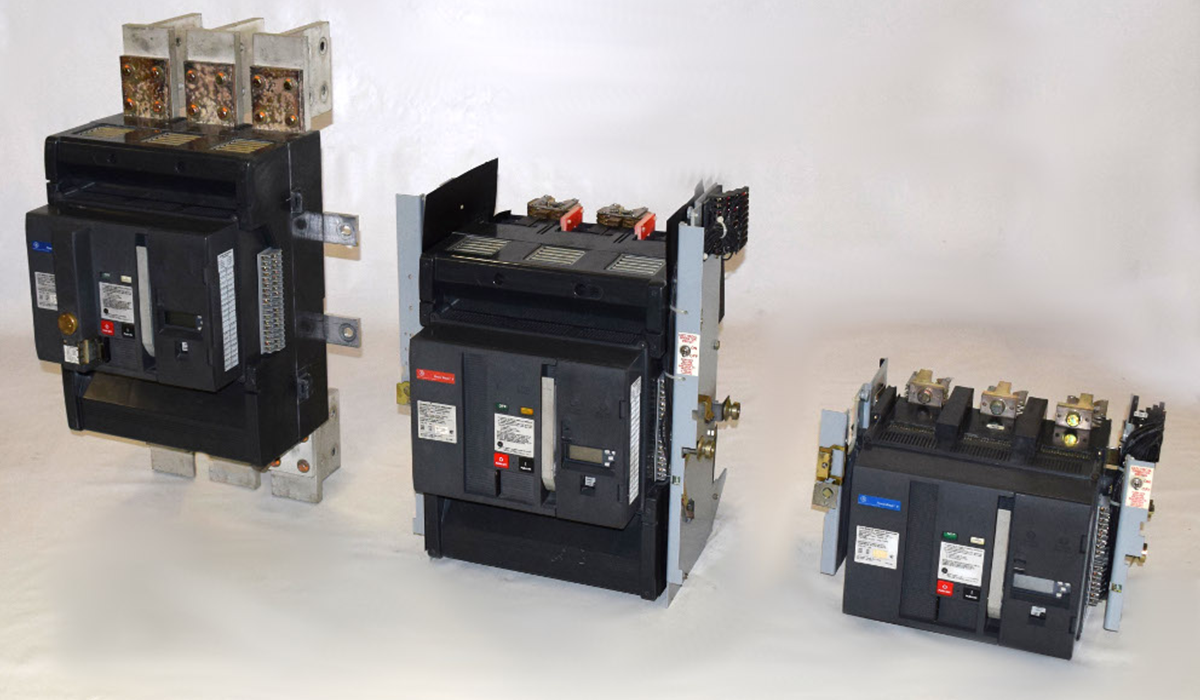
Arc-tolerant (arc-resistant) switchgear is the third category, and it works on the opposite principle to an AFCI. It does not detect anything. It is an enclosure designed and type-tested so that when an internal arcing fault occurs, the pressure wave, hot gases and molten material are contained and vented away from anyone standing near the equipment. The test guide is IEEE C37.20.7, which covers metal-enclosed switchgear, metal-enclosed bus, medium-voltage controllers, motor control centres and switchboards rated up to 38 kV AC, using air as the primary insulating medium.
Arc-Resistant Accessibility Types
The accessibility type defines which faces of the enclosure are protected, and under what conditions:
- Type 1 — protection at the front of the equipment only. Rarely specified.
- Type 2 — protection at the front, sides and rear.
- Type 2B — Type 2 protection maintained with the low-voltage control or instrumentation compartment door open. The most commonly specified level.
- Type 2C — arc resistance maintained between individual compartments as well, so gases from a faulted compartment cannot enter an adjacent one.
Two cautions worth stating plainly. Arc-resistant construction is never a substitute for PPE — the rating only holds when every door and cover is properly secured in accordance with the declared accessibility type, and it does not cover personnel working inside the equipment. And the rating protects people, not the switchgear: after a contained arcing fault, the equipment is often damaged beyond economic repair.
The practical distinction: an AFCI prevents an arc from becoming a fire. Arc-resistant switchgear assumes the arc will happen and protects the person standing in front of it. One is a detection problem; the other is a mechanical containment and venting problem — which is why arc-resistant performance depends heavily on internal construction, compartment sealing and how the busbar system inside the switchboard is arranged and supported.
How Arc Fault Detection Works Inside an AFCI Breaker
A modern AFCI reliably trips on dangerous arcing within milliseconds. The proof is UL 1699 test-bench arc-fault clearance times. The method combines high-rate current sampling, DSP signature matching, nuisance discrimination, and a solenoid-driven trip mechanism. The arc fault breaker operation sequence runs in four functional steps — monitoring, recognition, discrimination, interruption.
Step 1 — Continuous Current Monitoring and Signal Sampling
Every AFCI integrates a current sensor — typically a small current transformer or shunt — feeding an analog-to-digital converter that samples the waveform tens of thousands of times per second. That sample rate matters. Thermal-magnetic elements respond to RMS current over many cycles; AFCI electronics see each cycle in fine resolution and detect transient anomalies that average out at lower sampling rates. The microprocessor maintains a running window of recent samples for comparison.
Step 2 — How Arc Fault Detection Identifies an Arc Signature
This is the heart of arc fault detection technology. The DSP firmware compares live waveform features against a stored library of arc fault signatures: half-cycle current shoulder shape, gap discontinuities at zero crossing, broadband noise energy, cycle-to-cycle irregularity. Pattern matching runs continuously. Combination AFCIs carry richer libraries than the older outlet branch circuit (OBC) type because they must recognize both series and parallel signatures across a wider range of loads. Manufacturers invest heavily in expanding these signature databases — field data from millions of devices feeds refinement of false-positive rejection.
Step 3 — Discrimination Between Arc Faults and Nuisance Triggers
Healthy circuits arc all the time. Brush motors in vacuums and power drills generate commutator arcing; dimmer switches chop the waveform every half-cycle; switching power supplies inject high-frequency current. A naive arc detector would trip constantly. UL 1699 mandates that listed AFCIs withstand a defined library of operational arcing without false trip — and trip on a defined library of fault arcing within set times. The discrimination algorithm uses pattern persistence, energy characteristics, and time-correlated signatures to separate the two. Lower-tier devices struggle with EMI-heavy environments; higher-tier devices manage it without compromising sensitivity. This is the technical line between premium and commodity AFCI hardware.
Step 4 — Circuit Interruption and Fault Indication
When the DSP confirms an arc signature above the confidence threshold, it fires a trip solenoid that releases the breaker latch. Total time from arc onset to contact separation is measured in milliseconds — typically under 100 ms for moderate-energy arcs and a few half-cycles for high-current parallel faults. Most modern AFCIs include an LED trip indicator that distinguishes arc fault trips from overload or short-circuit trips; some commercial-grade devices log event data for later download. Differentiated trip indication matters in the field — diagnosis of a recurring AFCI trip starts with whether the device flagged arcing or overcurrent.
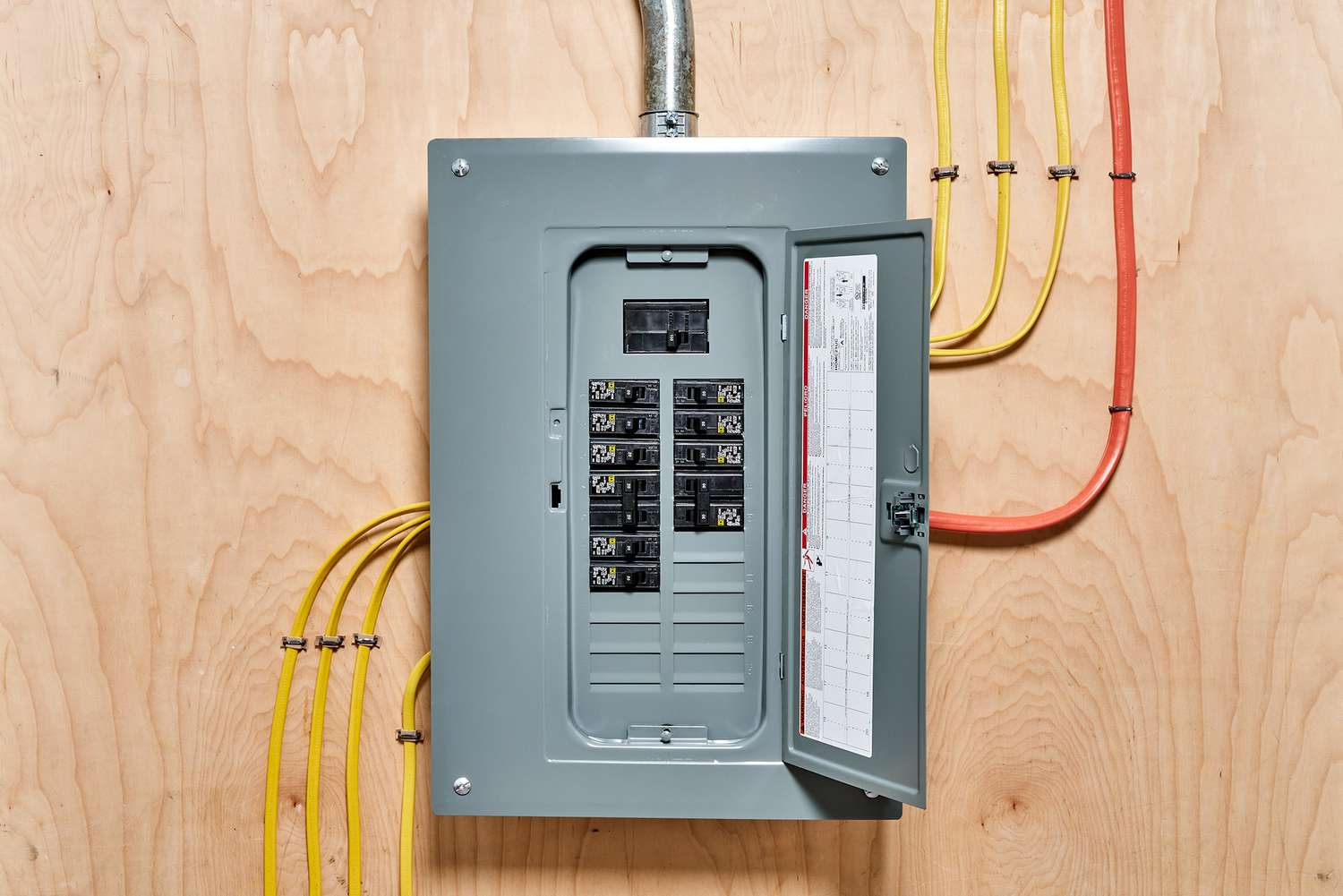
Interruption performance also depends on the panel the breaker sits in, since bus rating, construction and load centre design all affect how fault energy is managed — the equipment inside an electrical panel has to work as a coordinated system with the protective device, not independently of it.
Types of AFCI Circuit Breakers — Which One Do You Need?
Several AFCI categories exist, and the practical differences matter for code compliance and field performance. One point of confusion is worth clearing up first: not every AFCI type is listed to the same document. Combination and branch/feeder AFCIs are listed to ANSI/UL 1699, the product standard for arc-fault circuit interrupters. The outlet branch-circuit type is listed to a separate UL Outline of Investigation rather than to UL 1699 itself, and PV DC arc-fault protection sits under UL 1699B — a different standard entirely, covering DC photovoltaic systems under NEC Article 690, not AC branch circuits. IAEI’s standards overview of AFCI categories sets out the listing structure in detail.
Table 2: AFCI Circuit Breaker Types — Comparison by Type, Standard, and Application
| Type | Listing Document | Arc Fault Detection Capability | NEC 2020 Compliance | Best Application |
|---|---|---|---|---|
| Outlet Branch Circuit (OBC) AFCI | UL Outline of Investigation (Category AWBZ) | Series and parallel downstream of the outlet; parallel only on the upstream branch wiring | Permitted only under specific 210.12(A) methods with prescribed upstream wiring — verify with AHJ | Retrofit and specific code-compliant combinations |
| Branch/Feeder AFCI | UL 1699 | Parallel arc faults on full branch | Partial — verify with AHJ | Feeder protection in older panels |
| Combination AFCI | UL 1699 | Series AND parallel arc faults — full branch circuit protection | Meets NEC 2020 Article 210.12 | Residential, commercial, new construction |
| Dual-Function AFCI/GFCI | UL 1699 + UL 943 | Series and parallel arc faults plus ground fault | Meets AFCI AND GFCI requirements simultaneously | Bathrooms, kitchens, garages, outdoor |
| AFDD (Arc Fault Detection Device) | IEC 62606 | Series and parallel arc faults | Meets European/international codes | International commercial projects |
| PV DC AFCI | UL 1699B | DC arc faults in photovoltaic systems up to 1500 V | NEC Article 690 — not applicable to AC branch circuits | Solar PV arrays, inverters, combiners |
Panel compatibility narrows the choice further, since AFCI breakers are listed against specific load centre families — the GE breaker product families illustrate how manufacturers align their AFCI lines with their own panels, and the same logic applies across every major brand.
Code Requirements — Where Is AFCI Protection Required?
The question “when is an arc fault circuit interrupter required by code” has a clear answer for new US construction. NEC 2020 Article 210.12 mandates a combination type AFCI breaker for all 15A and 20A, 120V single-phase outlets in dwelling units. Covered spaces include bedrooms, living rooms, dining rooms, hallways, closets, sunrooms, recreation rooms, kitchens, laundry areas, and similar areas. NEC 2020 also expanded AFCI requirements into commercial occupancies: dormitory units, hotel and motel guest rooms, and similar sleeping accommodations. Internationally, IEC 62606 governs AFDD performance and is increasingly written into European, Middle Eastern, and Asian commercial specifications.
Jurisdiction matters. Not every state is on the current NEC edition — some operate under NEC 2017, 2014, or earlier with local amendments. Verify the adopted edition with the AHJ before specifying. Non-compliance is not merely an inspection failure: post-fire insurance investigations now routinely check for AFCI compliance, and the absence of mandated protection has been cited in claim disputes and subrogation actions.
Retrofits carry a capacity question as well as a compliance one. Adding AFCI breakers to an existing installation sometimes forces a load centre upgrade, so it is worth confirming what a 200-amp panel can actually accommodate before committing to a scope.
The Risks of Not Using Arc Fault Protection
Skipping arc fault protection on circuits where it is required or appropriate exposes owners and occupants to compounding risk. What causes arc faults in electrical systems is well documented — damaged insulation, loose terminals, pinched cabling, corroded connections — and any of these can sit latent for years before ignition. The fire risk is the headline: arc faults in branch wiring smolder undetected, often inside wall cavities, until ignition. The way an arc fault breaker prevents electrical fires is by clearing those events before they reach ignition temperature. NFPA and USFA fire statistics consistently rank electrical distribution and wiring among the top sources of structure fires, with arc faults a meaningful contributor. Insurance liability has tightened — carriers increasingly require AFCI-compliant installations and may invoke coverage limitations or pursue subrogation against contractors when arc-attributed fires occur on non-compliant circuits.
Code non-compliance carries its own costs: failed inspections, rework, project delays, and reputational damage to electrical contractors. Personnel safety risk grows where a low-energy series arc escalates into a higher-energy event. Asset loss in commercial buildings — destroyed IT equipment, ruined inventory, lost data, business interruption — runs far above the few thousand dollars saved by specifying standard breakers in lieu of AFCI. The risk-adjusted economics favor AFCI by a wide margin.
How to Select and Specify the Right AFCI Breaker
Selection runs through a tight decision tree. First, identify the application type: residential dwelling, commercial occupancy, industrial control, or mixed-use. Next, confirm the adopted code edition and any local amendments with the AHJ. Then determine whether combination-type AFCI is required or recommended for the scope. Assess whether dual-function AFCI/GFCI is needed for the specific circuit. Characterize load behavior — motor loads, dimmers, switching power supplies, VFD-adjacent EMI — and select an AFCI rated for the environment. Confirm panel compatibility, since AFCI breakers are listed against specific load center families and substitution is not optional. Finally, evaluate smart or connected AFCI options where building management system (BMS) integration adds operational value.
For complex specifications, request technical application support from the manufacturer. Major AFCI suppliers maintain applications engineering teams that review one-line diagrams, load schedules, and panel selections to validate compatibility before procurement. That review is free; the alternative — discovering compatibility issues at commissioning — is not.
AFCI vs Regular Breaker: What a Standard Breaker Cannot See
The technical gap is wide and consequential. The arc fault breaker vs regular breaker comparison comes down to detection physics, not feature lists. A standard thermal-magnetic breaker is not a weaker version of an AFCI — it is a device with no arc-detection mechanism at all.
Table 3: AFCI vs Standard Breaker — Feature and Performance Comparison
| Feature | Standard Thermal-Magnetic Breaker | Combination AFCI Breaker (UL 1699) |
|---|---|---|
| Overcurrent protection | Yes | Yes |
| Short-circuit protection | Yes | Yes |
| Series arc fault detection | No | Yes |
| Parallel arc fault detection | No | Yes |
| Ground fault protection | No (unless GFCI type) | No (unless dual-function type) |
| Detection method | Bimetallic strip plus electromagnetic element | DSP microprocessor plus current signature analysis |
| Response to low-level arc faults | Blind — does not respond | Detects and trips within milliseconds |
| NEC 210.12 compliance | Does not comply | Complies |
| Nuisance trip discrimination | N/A | Built-in — differentiates arc faults from normal load transients |
| Fault indication | Tripped position only | LED indicator and trip-type differentiation on most models |
| Cost premium | Baseline | 3x–5x baseline (varies by manufacturer and panel family) |
| Typical application | General overcurrent protection | Arc fault protection per NEC/IEC requirements |
Statistics and the Business Case for AFCI Protection
NFPA research consistently attributes tens of thousands of US home structure fires each year to electrical distribution and lighting equipment, with arc faults a meaningful share of the wiring-attributed events. Hundreds of fire-related deaths and thousands of injuries every year trace to electrical causes, and CPSC injury data reinforces the residential exposure profile. Cost per fire — including building damage, content loss, and business interruption in commercial settings — typically runs five to six figures, dwarfing AFCI hardware cost.
Post-2014 NEC adoption has driven steady AFCI installation growth in new US residential construction, and IEC 62606 adoption is climbing across European commercial markets as risk managers and insurers price arc fault exposure more accurately. Fire statistics are revised annually, so cite the current NFPA or USFA release rather than a secondary figure when building a business case for a specific project.
Case Studies — AFCI in Real-World Applications
The following are representative scenarios drawn from common specification patterns rather than named client projects. They illustrate where AFCI selection, panel matching, and load characterization make the difference between clean commissioning and field rework.
Table 4: Case Study Summary
| Case Study | Application | Challenge | AFCI Solution | Result |
|---|---|---|---|---|
| Commercial Office Retrofit | Class A office TI project | Panel compatibility, IT load discrimination | Combination AFCI, panel-matched selection | Code compliance, zero nuisance trips, insurance documentation |
| MDU New Construction | 300-unit residential/mixed-use | AHJ required combination AFCI vs lower-cost OBC type | Dual-function AFCI/GFCI at scale, bulk procurement | Single-pass inspection, reduced GFCI outlet count, lower installed cost |
| Industrial Control Room | Oil and gas SCADA/instrumentation circuits | EMI from adjacent VFDs causing nuisance trips | Advanced DSP AFCI rated for high-interference environments | Zero false trips, full compliance, diagnostic integration |
Case Study 1 — Commercial Office Retrofit: AFCI Compliance During Tenant Improvement
A commercial property management firm executes a tenant improvement on a Class A office building constructed in 2005. The original panel carries standard thermal-magnetic breakers. The jurisdiction’s adoption of NEC 2020 triggers AFCI requirements on new branch circuits installed during the TI scope. The engineering team specifies combination-type AFCI breakers from the panel manufacturer’s compatible family, runs a load characterization study to confirm device suitability against IT and HVAC loads, and produces an installation documentation package for the building’s insurance underwriter. The project closes with code compliance, zero post-commissioning nuisance trips, and a clear paper trail for the carrier.
Case Study 2 — Multi-Dwelling Unit (MDU) New Construction: Combination AFCI at Scale
A 300-unit MDU project under NEC 2020 jurisdiction begins with a specification of outlet branch circuit (OBC) AFCI to reduce material cost. The AHJ rejects the approach for the wiring methods proposed and requires combination AFCI throughout. The project engineer revises the specification to combination AFCI breakers paired with dual-function AFCI/GFCI in kitchens and bathrooms, then negotiates bulk pricing with the panel manufacturer. The dual-function devices remove the need for individual GFCI receptacles in the wet-area circuits, offsetting much of the breaker cost premium. The project passes single-pass inspection across all units with installed cost lower than the original OBC-plus-receptacle approach would have delivered.
At this scale, verifying that each breaker is matched to the right branch circuit before commissioning becomes its own task — a circuit breaker finder turns that from a two-person job into a one-person job across hundreds of circuits.
Case Study 3 — Industrial Control Room: AFCI Protection for Sensitive Instrumentation Circuits
An oil and gas facility upgrades its control room with new 120V branch protection for SCADA and instrumentation circuits. Initial commissioning of base-grade AFCI breakers produces repeated nuisance trips, traced to EMI from adjacent variable frequency drives on the facility distribution. The electrical engineer works with the manufacturer’s applications team to select advanced DSP AFCI models rated for high-EMI environments and validates compatibility through bench testing of representative loads. Re-commissioning shows zero nuisance trips over the verification period, full compliance documentation, and improved circuit-level fault diagnostics integrated into the facility’s maintenance management system.
How to Test an AFCI Breaker — Commissioning and Maintenance Guidance
Field verification — how to test an arc fault circuit interrupter — starts with the breaker’s built-in TEST button. Pressing it triggers an internal arc signature simulation; the breaker should trip to the off or tripped position. Reset by switching fully to OFF then back to ON. The TEST button validates the trip mechanism and the basic detection path — it does not exercise the full library of arc signatures. For commissioning of commercial installations, supplement the TEST button with a third-party arc fault tester that injects a real waveform signature into the circuit. Document the test results for each circuit. NFPA 70B provides the practice baseline for periodic re-testing. Distinguish arc fault trips from overload trips on subsequent service calls by reading the AFCI indicator LED — diagnosis starts with the trip type, not the symptom.
Why Specifying the Right AFCI Matters — Procurement and Buying Guidance
UL 1699 listing is the minimum bar — not a quality indicator. Within that listing, performance varies meaningfully across manufacturers and product generations. Look for AFCI lines with deep arc signature databases, documented field reliability, and active firmware refinement. Panel compatibility is non-negotiable: specify the panel family first, then the AFCI breaker family. Substituting a third-party breaker into an incompatible panel violates the listing and the warranty.
Total cost of ownership dominates the procurement math. A cheap AFCI that nuisance trips generates callbacks, troubleshooting labor, and tenant friction that quickly outweighs the per-device savings. On commercial projects, work with a distributor capable of pre-project technical validation rather than catalog fulfillment. Ask manufacturers about firmware update capability, smart monitoring integration, warranty terms, and product line continuity — discontinued lines create real spares-availability problems over a 20-year asset life.
Most compatibility errors at the procurement stage come from treating the breaker in isolation. A working knowledge of what an electrical panel is and how it is structured prevents the majority of them.
Conclusion
AFCI breakers operate on fundamentally different technology than standard thermal-magnetic protection. High-rate sampling, DSP signature recognition, and trained nuisance discrimination let them catch the low-current, irregular arc events that overcurrent protection cannot see. NEC 2020 has made combination-type AFCI a baseline requirement across most US dwelling occupancies and increasing portions of commercial occupancy scope, and IEC 62606 is driving the same direction internationally.
Three things worth carrying away. Select combination-type AFCI listed to UL 1699 unless a documented reason exists to do otherwise. Lock in panel compatibility before procurement, not at commissioning. And keep the three arc technologies separate in your specification language — an AFCI stops a fire in branch wiring, arc flash analysis protects people working on distribution equipment, and arc-resistant switchgear to IEEE C37.20.7 contains an internal fault that has already happened. They are not interchangeable, and no one of them covers the others.
The cost premium over standard breakers is real but small against the financial, legal, and human cost of an arc fault-attributed fire. For technical support in specifying the right arc fault circuit breaker for your project, contact our engineering team.


Rate this article
Choose a rating from 1 to 5 stars.
No ratings yet