





In this guide, we explore the key features, IP protection ratings, design philosophy, modular construction advantages, and real-world applications of the CUBIC system. The goal is to help engineers, electrical consultants, and industrial buyers evaluate whether this type of modular electrical enclosure system is suitable for their project requirements.
A well-designed LV switchboard is not only a metal enclosure. It is a complete structure that must support mechanical strength, thermal performance, safe power distribution, cable routing, component accessibility, and long-term maintenance. This is why modular enclosure systems such as CUBIC are widely used in projects where future expansion, standardized assembly, and dependable protection are important selection factors.
If you are looking for more information about Electrical Panels and Switchgear, it is recommended not to miss reading this article.
For your convenience, if you prefer listening, you can listen to the rest of this article via the audio file below.
What Is the CUBIC Electrical Switchboard System?
CUBIC is a modular enclosure system specifically engineered for the construction of low-voltage electrical switchboards. Its modular architecture is built around a core module size of 192 mm — a dimension chosen because it divides evenly without fractional values, making it highly compatible with standard component sizing and greatly simplifying assembly logistics on-site.
The system’s strength lies in its adaptability. Unlike fixed enclosure designs, CUBIC allows engineers to configure the enclosure’s height, width, and depth precisely according to the installation environment, load requirements, internal busbar arrangement, cable entry direction, ventilation needs, and component layout. This flexibility is especially valuable in industries where space constraints and operational demands vary considerably from one project to the next.
By relying on a limited set of standardized components, the CUBIC platform allows for the assembly of custom-designed enclosures without the need for fully bespoke manufacturing. This can reduce engineering complexity, simplify procurement, support repeatable production, and make future upgrades or reconfigurations easier when operational needs change.
For a comprehensive understanding of Electrical Panel, we highly recommend reviewing this article.
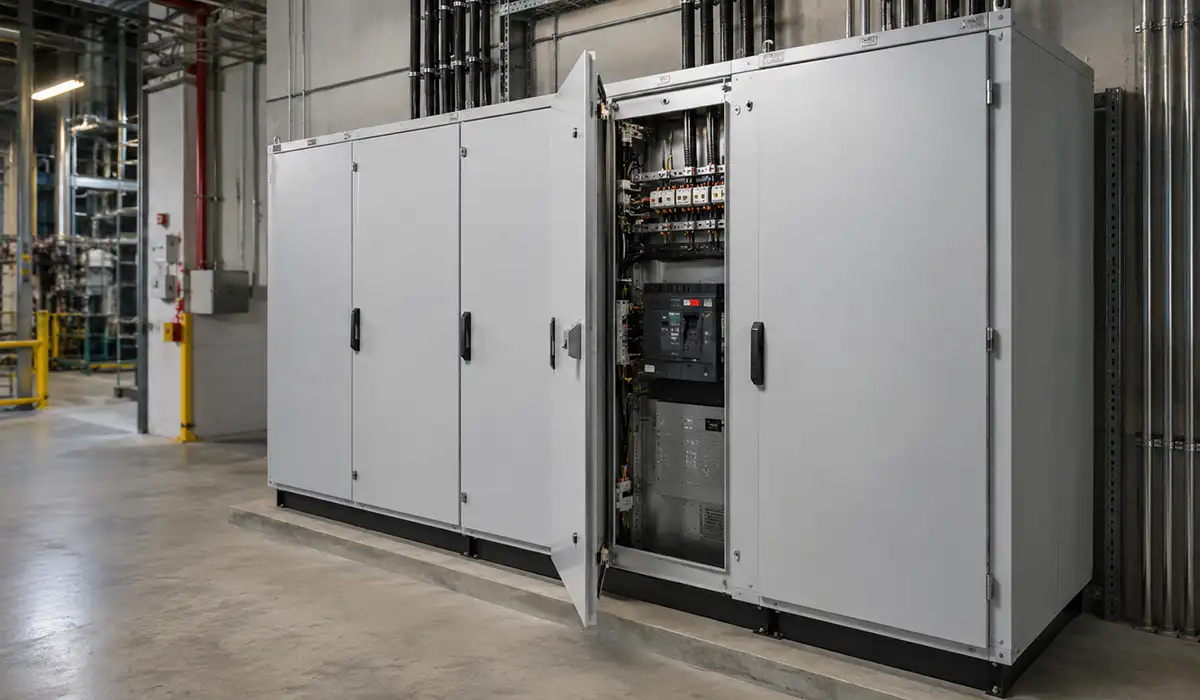
CUBIC – A Switchboard Enclosure for Different Industries
CUBIC switchboards are deployed across a wide range of sectors where reliable power distribution, safe electrical protection, and long-term serviceability are non-negotiable. Whether installed in a remote mining operation, a marine environment, or inside a critical hospital electrical room, the system is designed to support demanding operating conditions.
Typical application environments include:
- Mining operations and underground facilities
- Marine vessels and offshore platforms
- Hospitals and healthcare infrastructure
- Power generation plants and substations
- Wind farms and renewable energy installations
- Heavy industrial manufacturing facilities
- OEM production lines and large infrastructure projects
In each of these environments, the ability to quickly modify, expand, or reconfigure a switchboard without full replacement is a critical operational advantage — and it is precisely what the CUBIC modular concept delivers. The system’s open component compatibility also means engineers are free to source switchgear, circuit breakers, meters, relays, control components, and busbar systems from a wide range of manufacturers, avoiding vendor lock-in and optimizing procurement costs.
If you are looking for more information about Types of Electrical Panels, it is recommended not to miss reading this article.
Note: The flexibility of the modular system also means quick and easy assembly using minimal tools, reducing installation time, optimizing labor usage, and helping to control overall project costs from start to finish.
If you are looking for more information about electrical enclosures and their role in industrial power systems, it is recommended not to miss reading this article: Electrical Enclosure
What Does IP54 Mean?
The IP rating, or Ingress Protection rating, is an internationally recognized classification system — defined under IEC standard 60529 — that specifies the degree of protection an enclosure provides against the intrusion of solid particles and liquids. Every CUBIC switchboard is rated at a minimum of IP54, making it suitable for many challenging industrial and semi-outdoor environments.
Breaking down the IP54 code:
- First digit 5 – Dust Protection: Dust may enter the enclosure, but not in sufficient quantity to interfere with proper operation or cause equipment damage.
- Second digit 4 – Liquid Protection: The enclosure is protected against water splashes from any direction, including indirect rain and spray.
In practical terms, a product with IP54 protection is both dust-resistant and resistant to water spray from all directions. This protection level is commonly applied in industrial and semi-outdoor environments where exposure to dust, moisture, and occasional water splashing is expected during normal operation.
Why Is IP54 Important for Electrical Switchboards?
Choosing the correct IP rating for your installation environment is one of the most important decisions in electrical panel specification. Underrating an enclosure can lead to premature component failure, increased maintenance costs, insulation problems, corrosion risk, and — most critically — safety hazards for personnel and equipment.
Selecting a product with IP54 or higher helps improve resistance to rain, dust, and environmental contamination. This is especially important for industrial electrical enclosures installed in production halls, humid areas, marine locations, dusty facilities, infrastructure projects, and semi-outdoor technical rooms.
Further exploration of IP protection ratings and the IEC 60529 standard can be found in the following recommended reading: IP Code (Ingress Protection)
Other IP Protection Ratings CUBIC Modular Switchboard
In addition to IP54, there are other IP protection ratings, each representing a different level of resistance to dust and water. Understanding the full range helps engineers select the most appropriate enclosure for specific site conditions, maintenance expectations, and operational risks.
- IP55: Limited dust protection and resistance to low-pressure water jets
- IP66: Complete protection against dust and resistance to strong, high-pressure water jets
- IP68: Complete protection against dust and suitability for long-term immersion in water
The higher the IP rating, the stronger the environmental protection. However, higher protection levels may also affect ventilation, heat dissipation, enclosure cost, and component accessibility. Therefore, the best enclosure is not always the one with the highest IP rating, but the one that correctly matches the actual installation conditions.
For a comprehensive understanding of steel electric panels, we highly recommend reviewing this article.
IP Protection Rating Comparison Table
The table below provides a practical comparison of common IP protection ratings used for electrical enclosures and low-voltage switchboards. By comparing dust protection, water resistance, and typical application environments, engineers and project planners can better understand which enclosure rating is suitable for indoor industrial areas, semi-outdoor installations, offshore locations, or more demanding wet environments.
| IP Rating | Protection Against Solid Objects | Protection Against Liquids | Typical Application |
|---|---|---|---|
| IP54 | Limited protection against dust | Water spray from any direction | Industrial, semi-outdoor, marine |
| IP55 | Limited protection against dust | Low-pressure water jets | Outdoor panels, wash-down areas |
| IP66 | Complete protection against dust | Strong water jets | Offshore, heavy-duty outdoor |
| IP68 | Complete protection against dust | Long-term immersion in water | Submersible and underwater equipment |
Freedom to Build the Switchboard You Need
The CUBIC modular system’s 192 mm core module size is the foundation of its flexibility. This design principle provides maximum adaptability and allows the enclosure to meet user needs, customer requirements, and consultant specifications without unnecessary compromise. Because all modules are dimensionally compatible, combining different configurations is straightforward and requires no custom tooling or special fabrication.
Key advantages of choosing the CUBIC modular system include:
- Reliable and safe low-voltage power distribution
- Easy modification, rearrangement, and future expansion of the switchboard
- Complete freedom to select electrical components and switchgear from different manufacturers
- Fast and simple assembly using minimal tools
- Short delivery and installation times — ideal for time-sensitive projects
- Suitability for harsh, humid, or demanding environments, certified up to IP54
- Consistent build quality driven by standardized, pre-engineered components
Further exploration of Maintaining Electrical Switchboards can be found in the following recommended reading.
Assembly Efficiency and Total Cost of Ownership in modular electrical enclosure
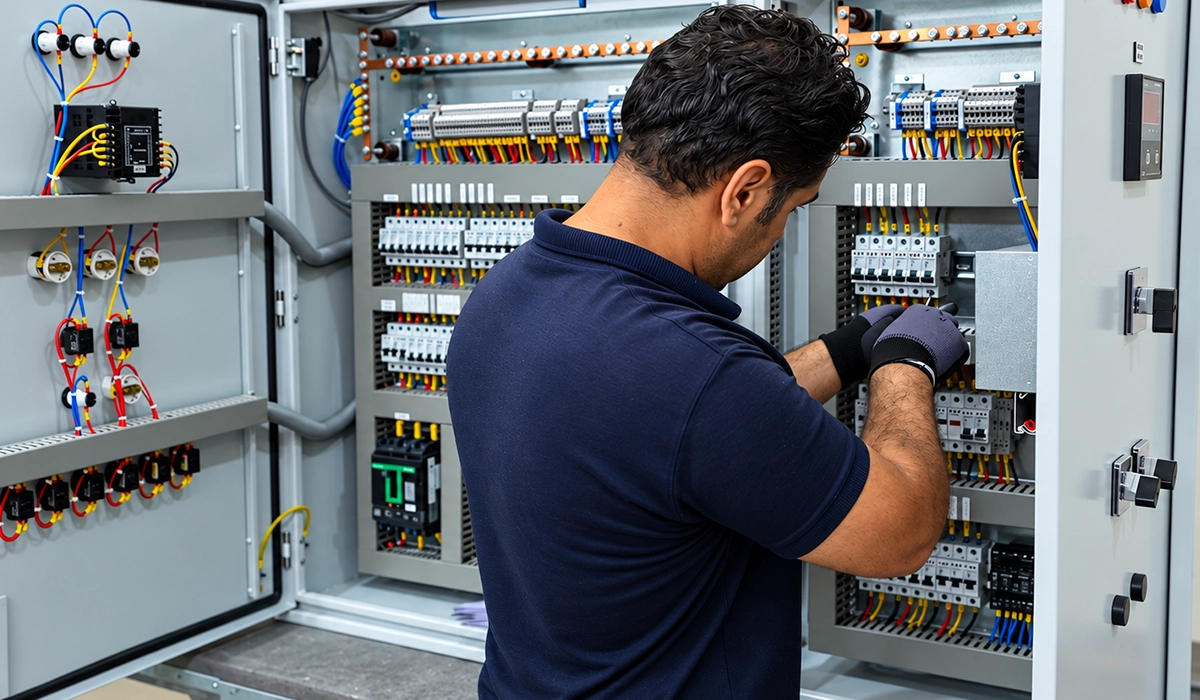
One of the most frequently overlooked advantages of a modular electrical enclosure system is its direct impact on total project cost. Because CUBIC components are standardized and designed for minimal-tool assembly, skilled electricians can complete enclosure builds faster than with many custom-fabricated alternatives. This reduces labor hours, minimizes the risk of dimensional errors, and shortens overall commissioning timelines.
Furthermore, the ability to reconfigure or expand the enclosure without replacing the entire structure means that the initial investment continues to deliver value across the full operational life of the installation. For asset-intensive industries such as power generation, mining, marine operations, and offshore energy, this lifecycle advantage can be more important than the initial enclosure purchase price.
From an SEO and user-intent perspective, this is one of the strongest arguments for modular LV switchboard systems: they support not only technical reliability, but also faster project execution, better scalability, easier maintenance, and lower long-term ownership costs.
This article serves as a valuable resource for those seeking detailed information on LV vs MV Switchboards.
CUBIC – A Smart Solution for Electrical Enclosures
Wherever safe, reliable, and efficient operation of electrical switchboards is required, the flexibility of the CUBIC modular system makes it a practical solution. This is demonstrated by its widespread adoption in industries including OEM manufacturing, mining, infrastructure development, marine applications, industrial production, power generation, renewable energy, and offshore installations worldwide.
For engineers and electrical panel builders, the main value of the system is not only its enclosure structure. It is the combination of modularity, component freedom, IP54 protection, assembly efficiency, and long-term adaptability. These factors make CUBIC relevant for projects where reliability, maintainability, and future expansion are essential.
Further exploration of Industrial Switchboard can be found in the following recommended reading.
This article serves as a valuable resource for those seeking detailed information on distribution boards and low-voltage panel design: Distribution Board
Conclusion
The IP protection rating is a critical indicator of how well an electrical enclosure resists the penetration of dust and liquids. Understanding this classification enables engineers, consultants, and project owners to select the most suitable equipment, ensuring safe operation, long service life, and reliable performance across a variety of environmental conditions.
Combined with the design freedom, modular architecture, open component compatibility, and proven reliability of the CUBIC modular system, IP54 protection makes this solution one of the strongest options for many low-voltage electrical switchboard enclosure projects.
FAQs about CUBIC Electrical Switchboard




Rate this article
Choose a rating from 1 to 5 stars.
No ratings yet