

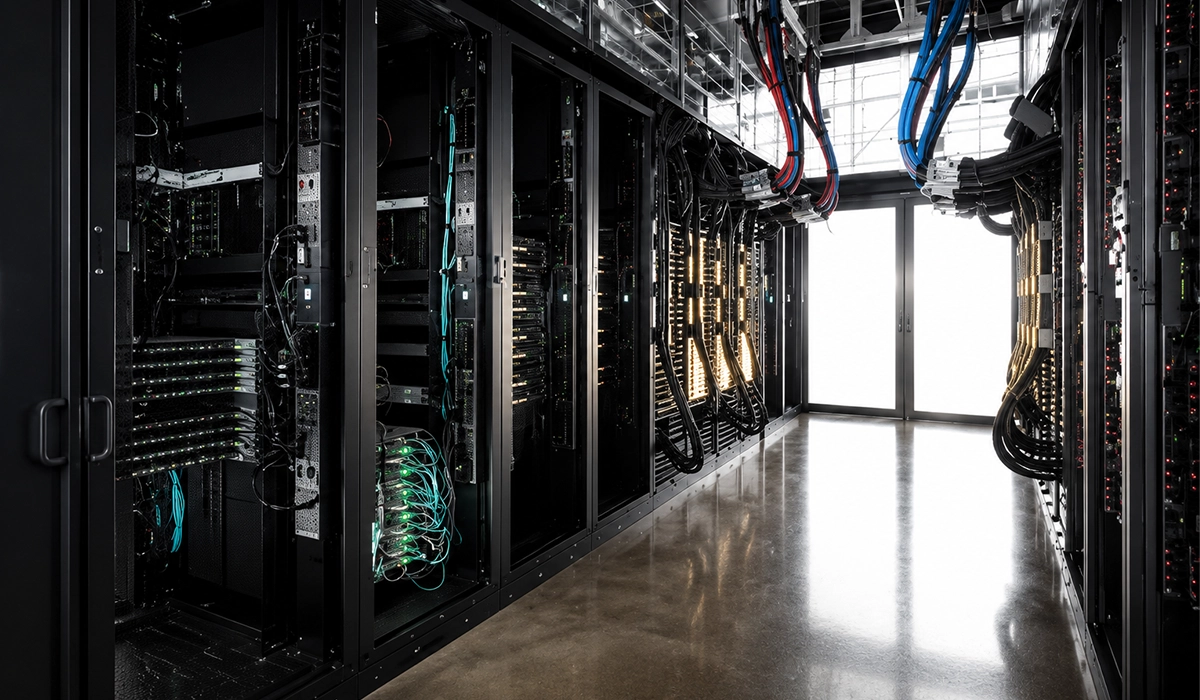

If you’d rather listen than read, feel free to play the audio file below for the rest of this article.
What a rack has to be before anyone cuts steel
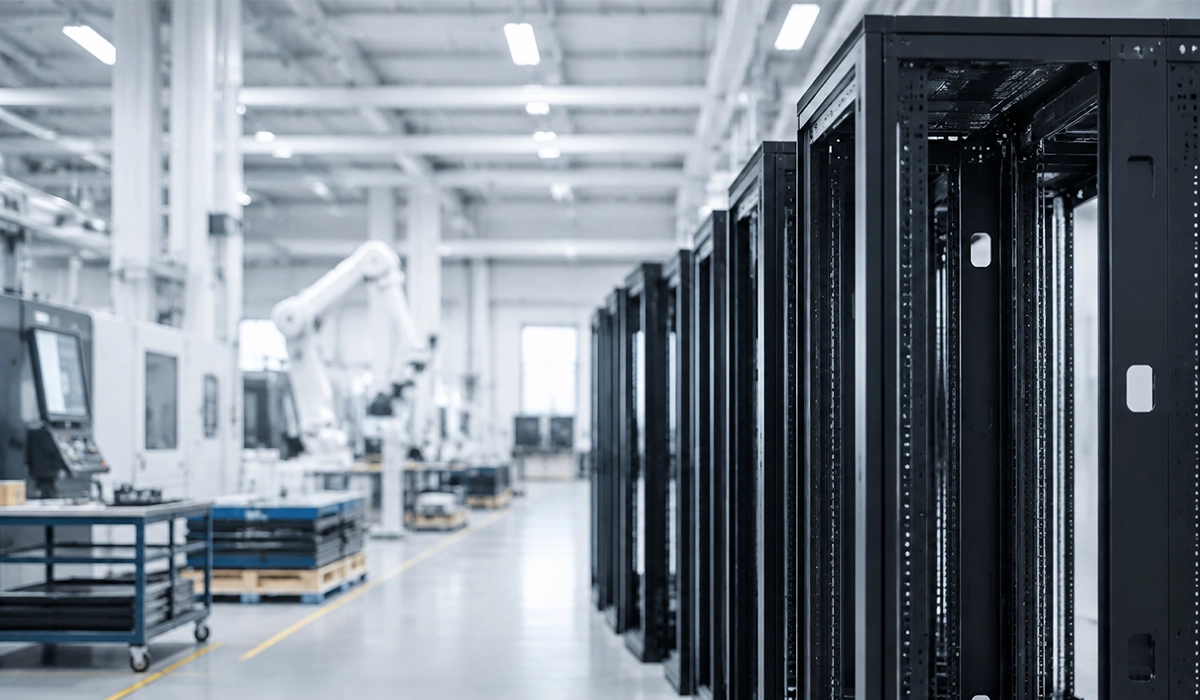
The dimensional spec is fixed and non-negotiable. Nineteen-inch mounting per EIA-310-E and IEC 60297-3-100, one rack unit equal to 44.45 mm, 482.6 mm panel width, and 465.1 mm between rail centers. Common heights are 42U and 45U.
The enclosure spec sits on top of that. IEC 62208 covers empty enclosures, IEC 60529 sets the IP rating, and IEC 61439 applies where the cabinet forms part of a switchgear assembly.
The load spec is now the harsh one. Racks are expected to survive transport fully populated at weights above 10,000 lbs, which makes frame stiffness and corner strength a delivery condition rather than a design preference. Nothing in the dimensional standard anticipates that load.
The airflow spec is a server rack fabrication requirement wearing a different hat. Open area percentage on the front and rear doors is derived from the kW per rack. Uptime Institute puts modal densities near 9 kW, with heavy adoption in the 10–30 kW band and direct liquid cooling entering above roughly 20 kW. Door perforation on a custom data center cabinet is now a calculation rather than a pattern choice.
Every figure in this section is set out in full in our guide to standard server rack dimensions.
Station by station
Seven stations, in production order. Data center server rack manufacturing does not let you reorder them, and a fabricator will notice if you try.
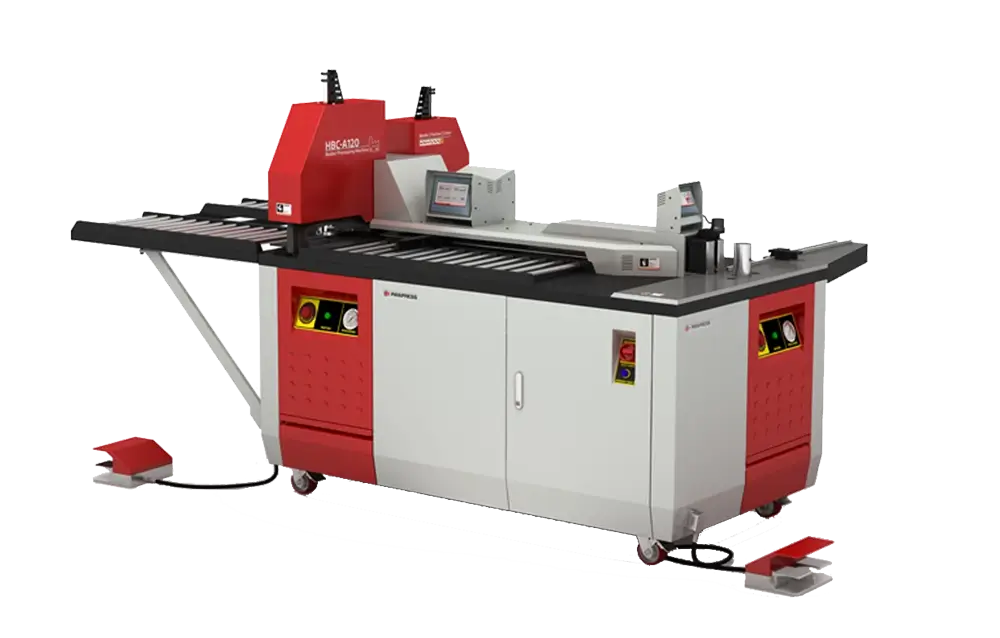
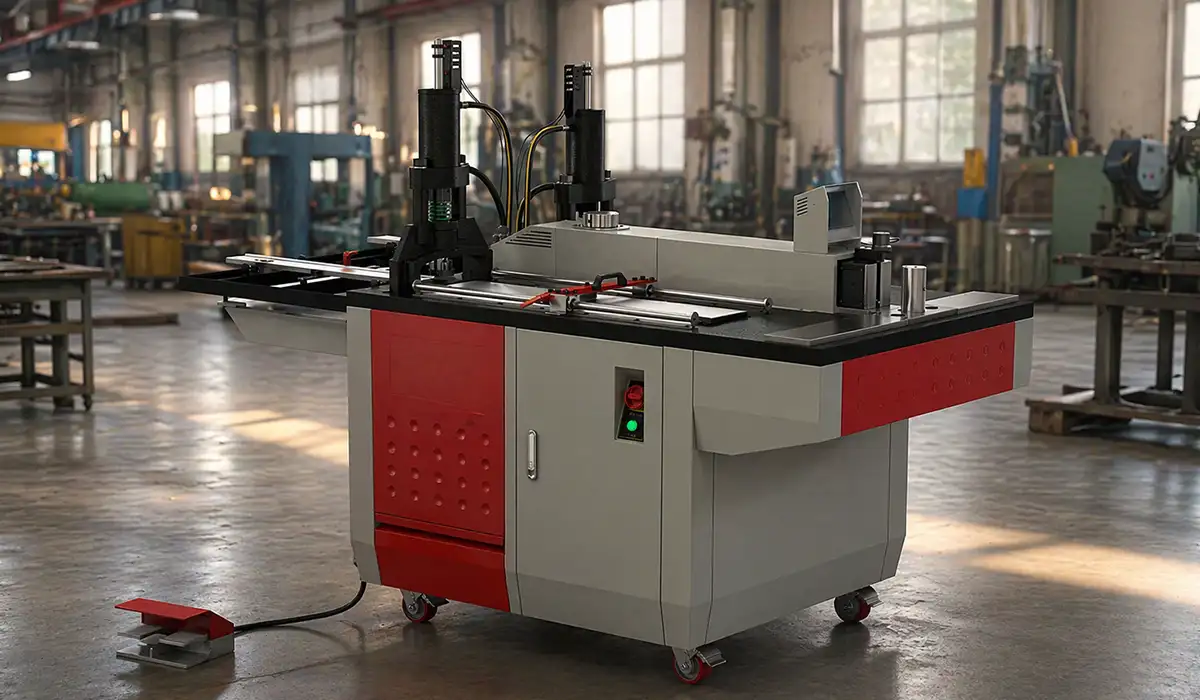
Three of these seven stations run on a metal bending machine.
1. Steel selection and blanking
Cold-rolled steel with controlled pretreatment and a powder coat is the common choice for visible frames and panels. Galvanized sheet goes where cut-edge protection, hidden corrosion resistance or unpainted internal parts matter. Most racks use more than one of these, chosen part by part rather than specified across the whole cabinet.
HRPO offers better formability and weldability than standard hot-rolled, which means cleaner bends and fewer problems during laser cutting or punching. Cold-rolled gives the dimensional accuracy that rails, shelves and mounting hardware need.
| Material | Best for | Trade-off |
|---|---|---|
| Cold-rolled | Rails, shelves, mounting hardware, visible panels | Highest material cost of the three |
| HRPO | Formed and welded structural parts | Surface less refined than cold-rolled |
| Galvanized | Cut-edge protection, unpainted internal parts | Coating cracks at tight bend radii |
The failure mode is copying a gauge from a competitor’s datasheet. A heavily perforated 1.5 mm door can be less rigid than an unperforated 1.0 mm panel, so thickness has to follow the load path.
Material choice is the first decision in the wider sheet metal fabrication process.
2. Punching
This is the highest-repetition station in the building. Square mounting holes on the rails, cable entries, PDU cutouts, and the door perforation pattern.
Perforation is a specialism of its own, and suppliers compete on the number of patterns available to hit an airflow target.
Embossed ventilation louvers are formed cold, so there is no burning, no discolouration and no surface deformation. The advantage fabricators underestimate: a powder-coated panel can still be modified without damaging the surrounding coating. Data center layouts change late, and that is the difference between a change order and a scrap panel.
A sheet metal punching machine in the HPM-63S envelope handles steel up to 2 mm, with corner notching on the same machine.
3. Forming, folding and corners
Panels and doors go to the brake or panel bender. Frame uprights and beams are often roll formed instead.
Roll forming stays repeatable across runs of thousands of parts, and in-line punching produces holes, slots and notches during forming rather than as secondary operations. Those beams and upright profiles carry the equipment load and hold the cabinet square.
Then the corner. Traditionally: weld, grind, polish, repair the coating. Four operations after bending, three of which depend on a skilled hand.
Cold corner forming closes the corner from the parent material under pressure. No bead, no grinding, no polishing, no coating repair. Beyond speed, identical geometry from a corner forming machine is what makes an IP rating repeatable across an entire delivery instead of across a sample.
Failure mode: springback. Angle drifts across a batch when compensation is left to operator feel rather than machine setting.
Springback and cracking both trace back to the sheet metal bend radius.
4. Hardware insertion
Self-clinching nuts, studs and standoffs go in here. The sequence is not flexible.
They displace sheet material so it cold-flows into an annular recess in the shank, with a serrated ring resisting rotation. Any parallel squeezing force installs them, leaving permanent threads and a flush reverse face.
Hardware goes in after forming and before finishing, so the coating covers and protects the installation area.
PennEngineering’s published rules get broken routinely. Do not deburr the mounting hole first — that removes the metal the fastener needs to clinch into. Do not install on a pre-painted face. Do not over-squeeze. Do not install adjacent to a bend, and respect the minimum edge distance.
Failure mode: a fastener in sheet too hard, too thin or too close to an edge will not hold. PEM recommends standard steel nuts for sheet at HRB 80 or less.
Fastener positions belong in the drawing stage, covered in our sheet metal enclosure design guide.
5. Welding and frame assembly
Once corners are formed, only the structural joints should still be welded: frame uprights to base and top, and load-bearing brackets.
Process selection is standard. MIG for steel structurals, TIG for stainless and aluminium, spot welding for sheet-to-sheet, stud welding for blind-side fasteners. Higher-volume lines integrate welding into the profile line rather than running it as a separate cell.
Failure mode: heat distortion on thin panels, and the squareness check that gets skipped when the line is running behind schedule. Both show up at final assembly rather than here.
The labour reality sits here without needing emphasis. Welding is the station most exposed to the skilled-labour shortage, so every joint removed upstream is capacity gained at this one.
Every joint you avoid starts with knowing which sheet metals can be cold formed.
6. Pretreatment and powder coating
Parts are degreased, pickled and phosphated before entering the electrostatic spray line. Pickling removes mill scale and leaves the clean surface a quality powder coat needs.
A coating spec should pin down six things: powder type and approved supplier, colour, gloss and texture, dry-film thickness range, adhesion and cure verification, and cosmetic inspection standard.
Most of the common questions are already answered in this helpful resource.
Two traps live here. Heavy texture hides surface variation but affects labels, mating surfaces and batch-to-batch matching. Thick coating reduces fit at hinges, rails and captive hardware.
Grounding is decided at this station, not later. Anyone asking how to ground a server rack is really asking a masking question. Masked pads at frame joints, ground studs or self-clinching grounding hardware, door bonding straps, and a rack-level continuity measurement. A bolted painted joint is not conductive just because the fastener is metal.
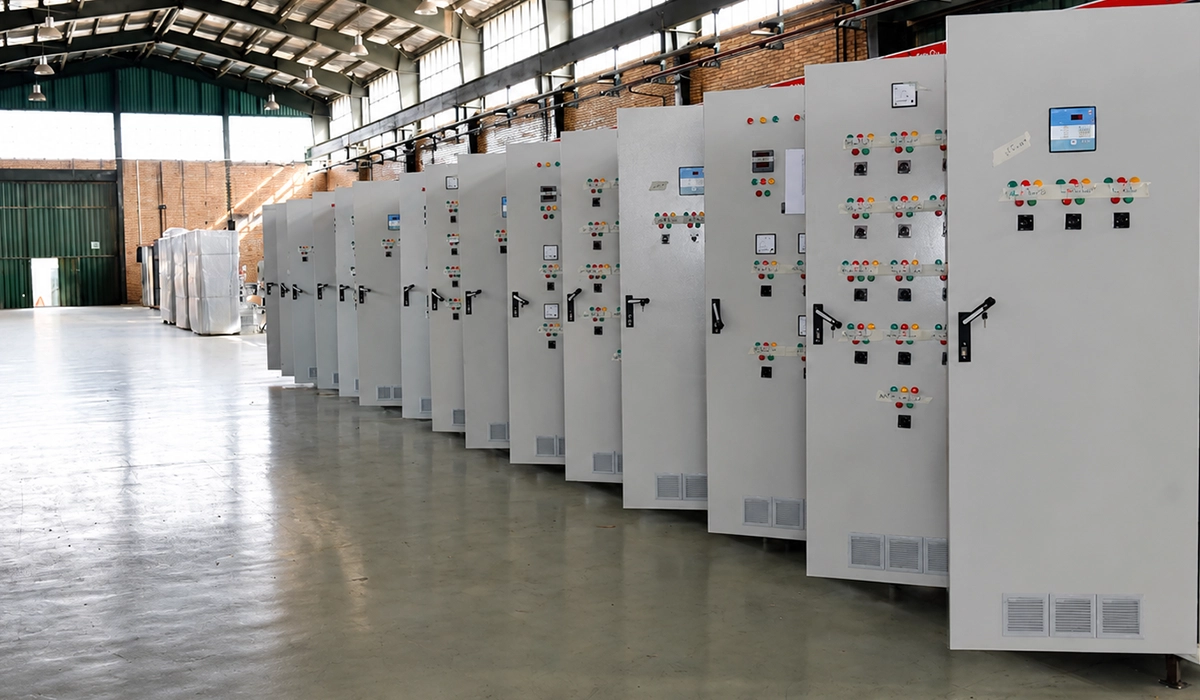
The same finishing decisions drive the cost of electrical panel doors.
7. Assembly, sealing, test and pack
Doors hung, gaskets applied, locks and hinges fitted, rails set, earthing straps connected. This is the first point at which the cabinet exists as a cabinet rather than as a set of parts.
Test at rack level, not part level. Continuity measurement across the assembled stack, IP verification if the cabinet is rated, squareness, and the rail-to-rail dimension.
Then the packing decision. Flat pack raises container load capacity; fully assembled moves labour cost from the customer back to the factory. Transport packaging has to hold a fully populated rack, which turns the 10,000 lb figure into a packaging engineering problem rather than a cardboard question.
Failure mode: a batch that passes every part inspection and fails at rack level, because tolerances stacked in the same direction. Individually in spec, collectively out of it.
Sealing is stricter again on explosion proof enclosures.
The copper work happening beside the line
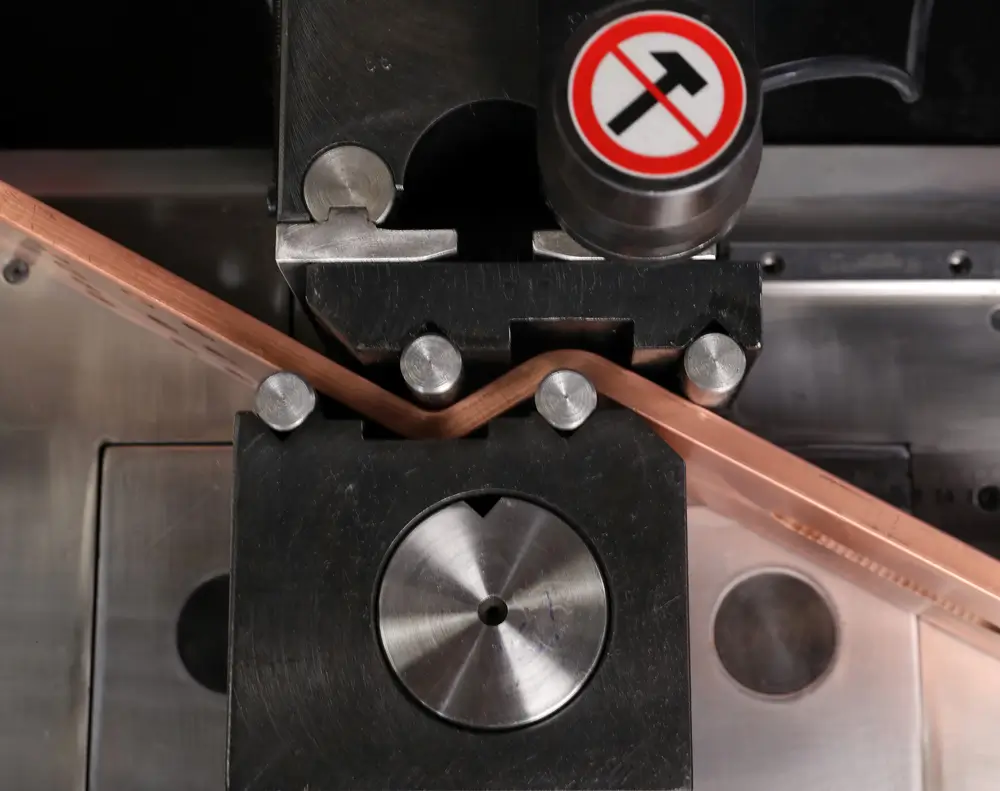
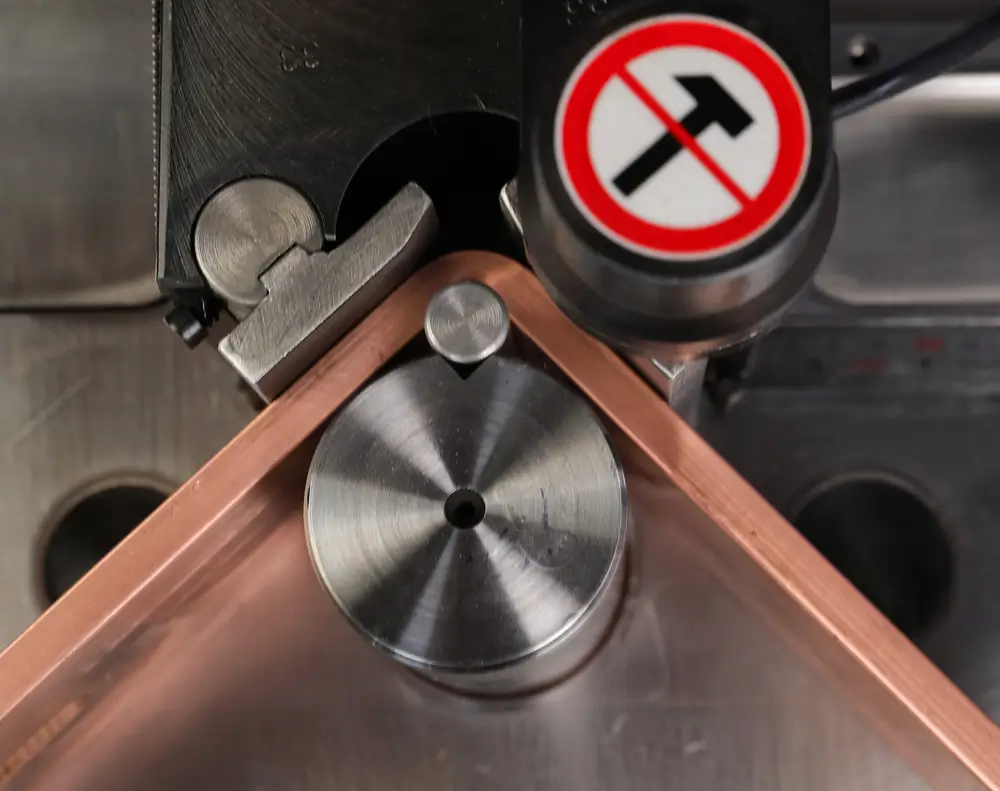
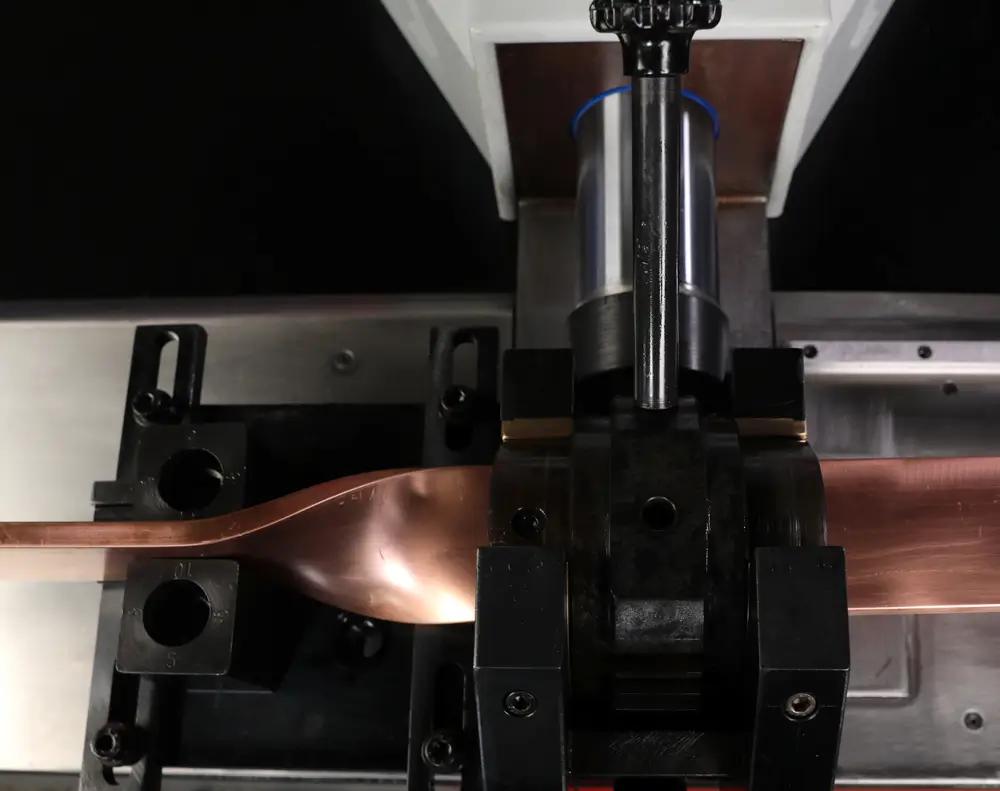
Around 70% of new data center projects now specify busbars in the grey space instead of end-to-end cabling. The conductor work therefore arrives with the data center cabinet order rather than after it, which changes what a shop has to quote for and what it has to schedule.
The volumes are substantial. NVIDIA notes that feeding 54 VDC into a single 1 MW rack can require up to 200 kg of copper busbar. Across a 1 GW data center, rack busbars could total around 200,000 kg.
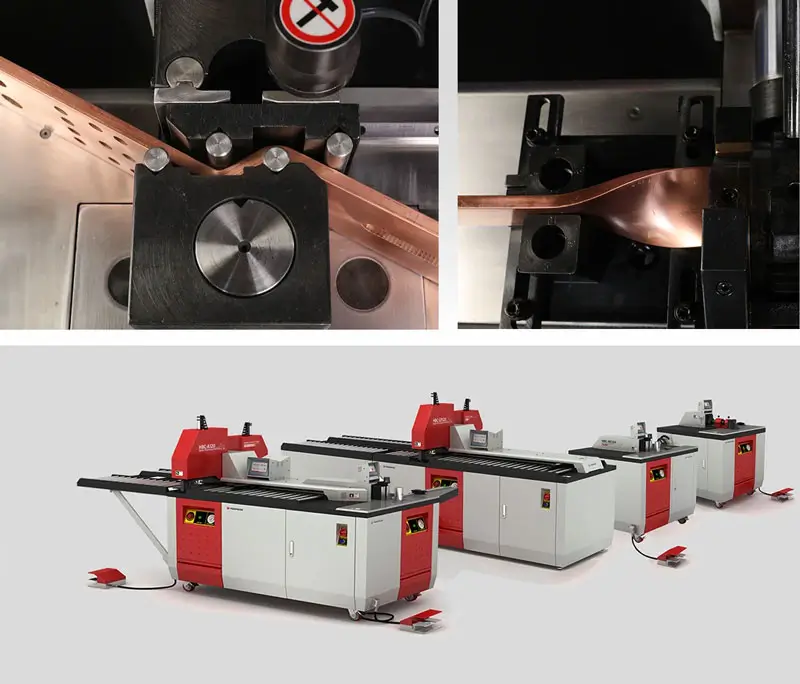
That copper is cut, punched and bent to drawing like any other fabricated part, and it arrives on the same schedule as the enclosure.
At these currents the tolerance on a bolted joint is a thermal question rather than a cosmetic one. A joint that is slightly out runs hot, and a joint that runs hot degrades further. Our busbars in AI data centers article covers that side properly.
Where the line actually slows down
Understanding how server racks are made is only half of it. Four constraints govern server rack fabrication throughput, and none of them is machine speed.
Transfers between stations. Traditional fabrication moves components between separate workstations for punching, notching and finishing. Every transfer adds handling, queue time and a chance to introduce error.
Operator-dependent finishing. Welding, grinding and polishing scale with headcount, not with investment. In a market short of welders, these stations cap output. Server rack manufacturing companies running at volume feel this first.
Changeover. Mixed cabinet heights and door types in one order destroy throughput when every change needs manual re-setting.
Late design changes. Cooling and power layouts move during a data center project, and they move late. A shop that cannot modify a coated panel turns every change order into a scrap panel and a reorder.
Changeover time is a specification, not an accident, as our bending machine selection guide explains.
Conclusion about Inside the Factories
Nothing on this line is technically difficult in isolation. What is difficult is doing all seven stations identically, four thousand times, while the drawing changes.
That is why the stations worth investing in are the ones that convert a skilled hand into a machine setting. Every operation moved from judgement to tooling is a batch that measures the same at the end as it did at the start.
To put numbers on that investment, see our busbar bending machine price guide.



Rate this article
Choose a rating from 1 to 5 stars.
No ratings yet