


Panelboard vs Switchboard vs Switchgear: The Short Answer
Start with three questions: how much current, how many circuits, and what an outage costs.
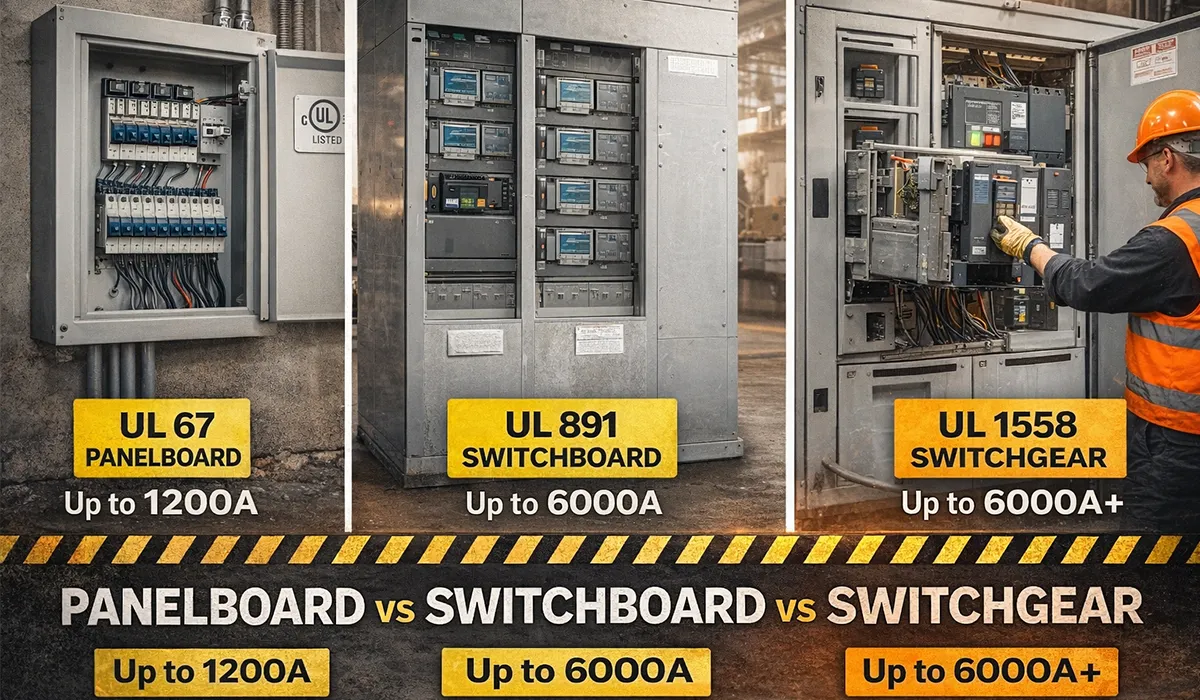
- Choose a UL 67 panelboard for branch and small feeder distribution close to the loads. Panelboard product lines typically top out around 1,200 A. They mount in a cabinet on a wall and are serviced from the front only.
- Choose a UL 891 switchboard for service entrance and main distribution in commercial and light-industrial buildings. It gives you higher ampacity, utility metering and many feeders in a compact, front-accessible lineup.
- Choose UL 1558 switchgear when:
- main and feeder breakers must hold closed through downstream faults for selective coordination
- breakers must be racked out for maintenance
- arc-resistant construction is required
Typical sites are hospitals, data centers, airports and continuous-process plants.
If an unplanned shutdown costs little, a switchboard is usually the economical answer. If it costs a production run or puts a patient at risk, price switchgear.
UL 67, UL 891 and UL 1558 Side by Side
The table compares the three standards on the points that decide a specification. Ranges marked “typical” come from manufacturers’ product lines, not from the standards themselves.
(This table replaces the old two-column table.)
| UL 67 Panelboard | UL 891 Switchboard | UL 1558 Switchgear | |
|---|---|---|---|
| Current edition | Edition 13 (2018), ANSI-approved Aug 2025 | 12th edition (2019, trinational), revised 2025 | Edition 6 (2025), revised June 2026 |
| Voltage scope | 1,000 V or less | 1,000 V or less | 1,000 V ac nominal (1,058 V max) |
| Mounting and access | In a cabinet, in or against a wall; front access only | Floor-standing; front access standard, rear optional | Floor-standing; rear access standard on most designs |
| Typical current | Up to about 1,200 A | Up to about 4,000–6,000 A | Main bus up to 10,000 A |
| Main breaker types | UL 489 molded-case | UL 489 molded-case and insulated-case; UL 1066 permitted; fused switches | UL 1066 power circuit breakers, usually drawout |
| Fault testing | SCCR limited by lowest-rated installed device | Minimum 3-cycle withstand; SCCR up to 200 kA | 4-cycle short-circuit plus 30-cycle short-time |
| Internal barriers | None | Not required | Required between breakers and bus |
| Arc-resistant option | No | No | Yes (IEEE C37.20.7) |
| UL Product iQ category | QEUY | WEVZ | WUTZ |
| Relative cost | Lowest | Mid | Highest |
New to panel terminology? Start with our guide to what an electrical panel is.
UL 67 Panelboards: Scope, Ratings and Limits
UL 67 is the UL Standard for Panelboards. It covers panelboards installed under the National Electrical Code whose job is controlling and protecting electrical circuits, including feeder distribution panelboards. The current text is Edition 13, first published in 2018 and ANSI-approved in August 2025.
A common myth is that UL 67 applies only to non-residential buildings. The same standard covers residential service panelboards and large commercial distribution panelboards alike. What it excludes is equipment built for another purpose, such as:
- transfer-switch-only equipment (UL 1008)
- industrial control panels (UL 508A)
- portable power distribution equipment (UL 1640)
Three ratings matter most in a UL 67 panelboard:
- Current rating. This is the maximum continuous current through the main terminals. Unless the panelboard and its devices are marked for 100% use, keep continuous loads to 80% of the device rating.
- Short-circuit current rating (SCCR). It is marked in rms symmetrical amperes. It is limited to the lowest interrupting rating of any installed breaker or fused switch, unless a tested series combination is marked on the panelboard.
- Service suitability. Only panelboards marked “Suitable for use as service equipment” may serve as the service disconnect. Services of 1,000 A or more on solidly grounded wye systems above 150 V to ground also need ground-fault protection under NEC 230.95.
Panelboards must also be dead-front unless they are installed where only qualified persons can reach them (NEC 408.38). For inspection-level detail, see UL Solutions’ Panelboard Application Guide.
UL67 Listing: What to Check on the Panelboard Label
A UL67 panelboard carries a listing mark with the product name “Panelboard” or “Enclosed Panelboard,” sometimes followed by “Suitable for Use as Service Equipment.” UL Solutions certifies these products under category code QEUY in its Product iQ database. That is where a buyer or inspector can confirm the manufacturer’s listing.
Before energizing, check:
- Ratings. Voltage, phase and ampere ratings should be visible without removing interior parts.
- SCCR. Confirm the marked SCCR and any series-rating table.
- Field-installed devices. Only breakers and accessories identified on the panelboard may be added. Breakers from another manufacturer are acceptable only if they are UL Classified for that specific panelboard. That program is limited to 15–60 A breakers in 120/240 V panelboards rated 225 A or less, on systems with no more than 10 kA available.
- Enclosure pairing. Except for service-equipment panelboards shipped in their own box, matching the interior to a suitable cabinet is the installer’s responsibility.
Switchboard vs Panelboard: Where UL 67 Ends and UL 891 Begins
The definitions draw the first line.
- A panelboard is designed to sit in a cabinet or cutout box, in or against a wall, and to be accessible only from the front.
- A switchboard is a large panel, frame or assembly of panels. It may be accessible from the rear as well as the front, and it is not intended to be installed in a cabinet.
In practice, a project moves from panelboard to switchboard when one or more of these apply:
- Ampacity. The main or bus rating exceeds what panelboard lines offer, typically about 1,200 A.
- Service features. The utility requires a metering compartment, or you need several service disconnects with ground-fault protection in one lineup.
- Feeder count. You need many large feeders. Switchboards handle these with group-mounted molded-case breakers in a compact section.
- Expansion. You want to add sections later instead of adding more wall-mounted boards.
The two are not mutually exclusive. UL recognizes panelboards installed inside compartments of dead-front switchboards, so one lineup can hold the service main, distribution feeders and branch panelboards. The switchboard’s SCCR is then limited by the lowest-rated panelboard installed in it.
Both must meet NEC Article 408. Panelboards also carry the 408.36 rule: each panelboard needs supply-side overcurrent protection rated no higher than the panelboard itself.
For switchboard specification details, see our UL 891 switchboard guide.
UL 1558 Switchgear: What the Standard Covers
UL 1558 is the UL Standard for Metal-Enclosed Low-Voltage Power Circuit Breaker Switchgear. It applies to switchgear assemblies built around low-voltage power circuit breakers, together with other interrupting devices, switches, controls, metering and protective equipment, for ordinary locations under the NEC. Its scope is equipment rated 1,000 V ac nominal, 1,058 V maximum.
The current text is Edition 6, published April 2, 2025. A further revision dated June 26, 2026 changed the requirements for multiple-source switchgear. Certification bodies are moving existing listings to Edition 6; Intertek, for example, set April 2, 2027 as its effective date. If you are reviewing switchgear submittals now, ask which edition the listing references.
Compared with switchboards, UL 1558 switchgear requires:
- power circuit breakers in individual metal compartments, with barriers between breakers and the bus
- short-circuit testing for at least 4 cycles, plus 30-cycle short-time withstand testing
- temperature testing at every bus rating, and seven production tests (versus three for UL 891)
UL certifies this equipment under category code WUTZ. For the wider standards landscape, see this switchgear standards guide.
UL1558 Works Alongside IEEE C37.20.1 and ANSI C37.51
UL1558 is not a standalone document. It supplements two others:
- IEEE C37.20.1 defines how metal-enclosed low-voltage power circuit breaker switchgear is designed and rated. It covers stationary or drawout power breakers in individual metal compartments, preferred maximum voltages from 254 V to 1,058 V ac, and preferred main bus ratings from 1,600 A to 10,000 A.
- ANSI C37.51 sets the conformance test procedures.
When you specify switchgear, name all three: “UL 1558 listed; designed and tested to IEEE C37.20.1 and ANSI C37.51.” Some industrial users buy unlisted “ANSI-rated” switchgear. If your authority having jurisdiction (AHJ) requires listed equipment, the UL 1558 listing is the part you cannot drop.
UL 891 vs UL 1558: Construction, Breakers and Serviceability
UL 891 vs UL 1558 is the comparison specifiers struggle with most, because the two lineups can look alike from across the room. The differences are inside:
- Breakers. UL 1558 switchgear uses UL 1066 low-voltage power circuit breakers: 100%-rated, maintainable, and able to withstand faults for up to 30 cycles. UL 891 switchboards mostly use UL 489 breakers: group-mounted molded-case feeders and individually mounted insulated-case mains. UL 1066 breakers are also permitted in switchboards.
- Compartmentalization. Switchgear requires barriers between breakers, and between breakers and the bus, lugs and control wiring. Switchboards do not require internal barriers.
- Access. Switchgear is typically rear-access. Switchboards are front-access as standard and can stand against a wall.
- Serviceability. A drawout power breaker can be racked out, tested and returned without disturbing load cables. A molded-case breaker is a sealed device, and replacing a group-mounted one usually means de-energizing the section.
- Voltage. Both standards now reach 1,000 V. Charts that still show UL 891 at 600 V are quoting its 2005 edition.
UL 891 buys power density and cost efficiency. UL 1558 buys continuity of service.
Bus Bracing and Withstand: 3 Cycles vs 30 Cycles
Withstand duration is the most consequential difference between the two standards.
- UL 891 switchboards are tested to hold short-circuit current for a minimum of three cycles. That is enough when instantaneous-trip breakers clear a fault almost immediately. Marked switchboard SCCRs range from 5 kA to 200 kA.
- UL 1558 switchgear is tested for at least four cycles of short-circuit current and 30 cycles (0.5 s) of short-time withstand. That longer withstand lets main and feeder power breakers run without instantaneous trips, so the breaker nearest the fault clears it while everything upstream stays closed.
Two cautions:
- Insulated bus is an option on some switchboard and switchgear designs, not a requirement of either standard. If you want it, specify it.
- Ampacity alone doesn’t decide the choice. Switchgear main bus ratings reach 10,000 A, but switchboards cover most services up to 4,000–6,000 A.
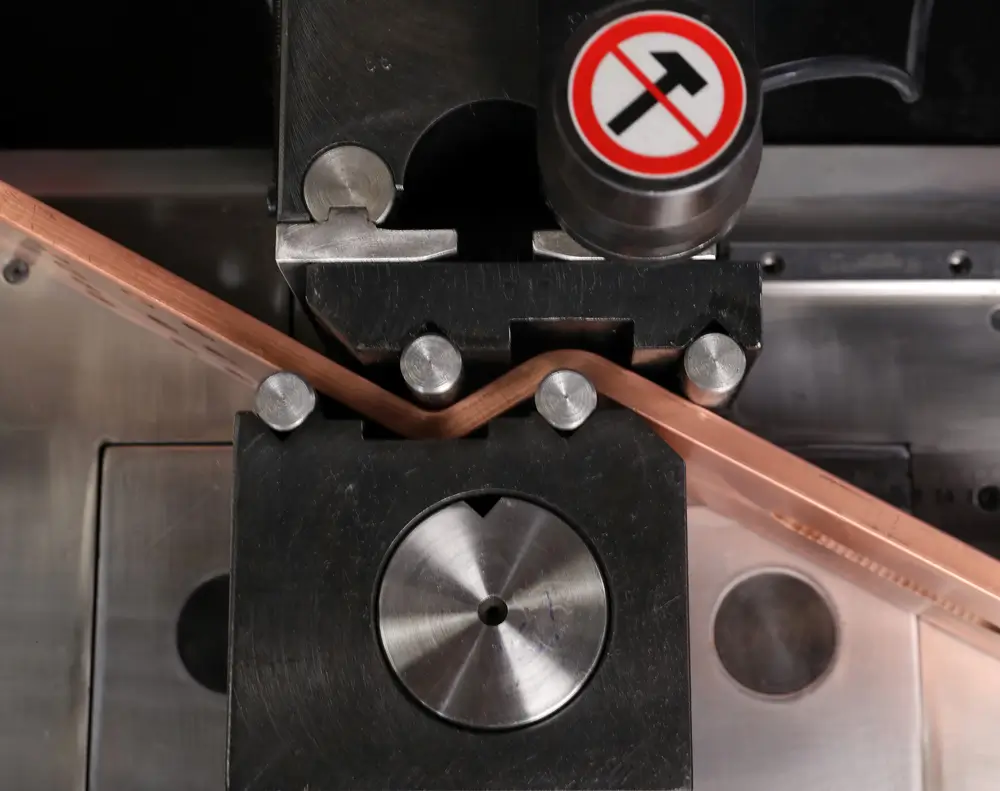
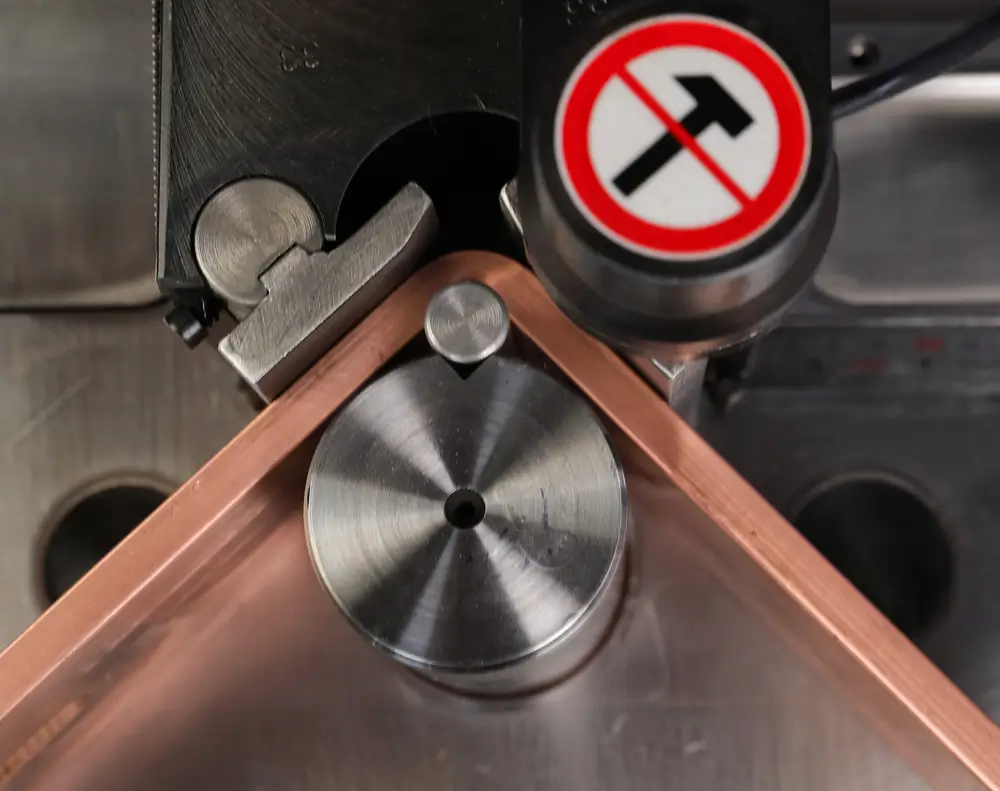
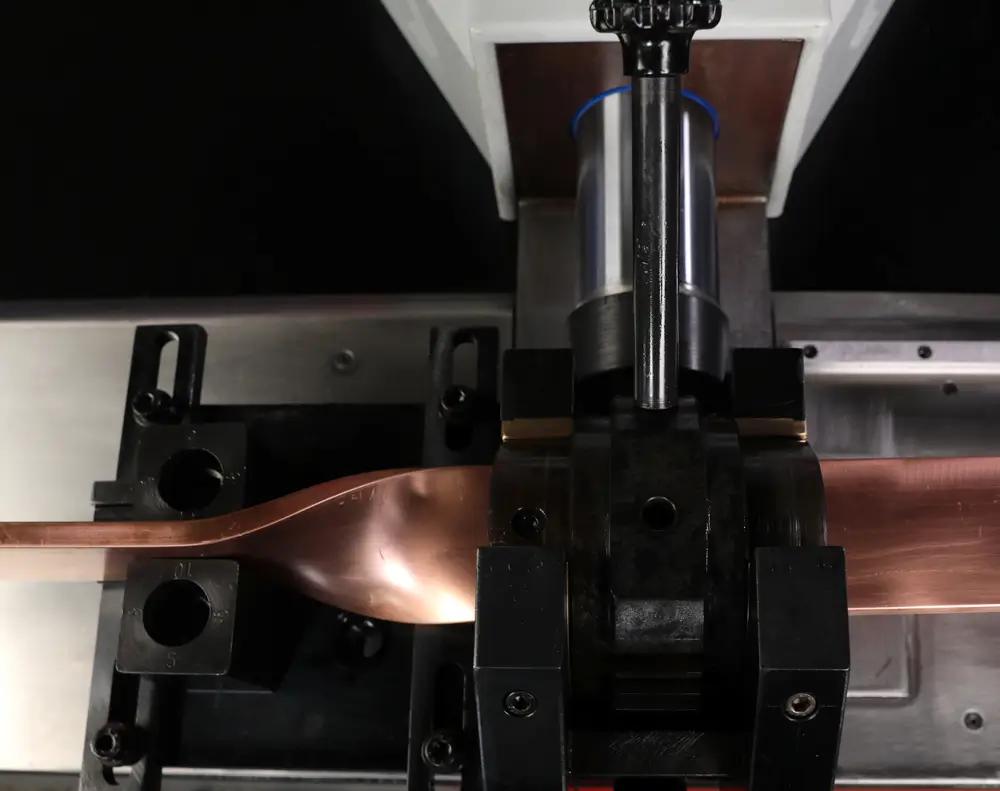
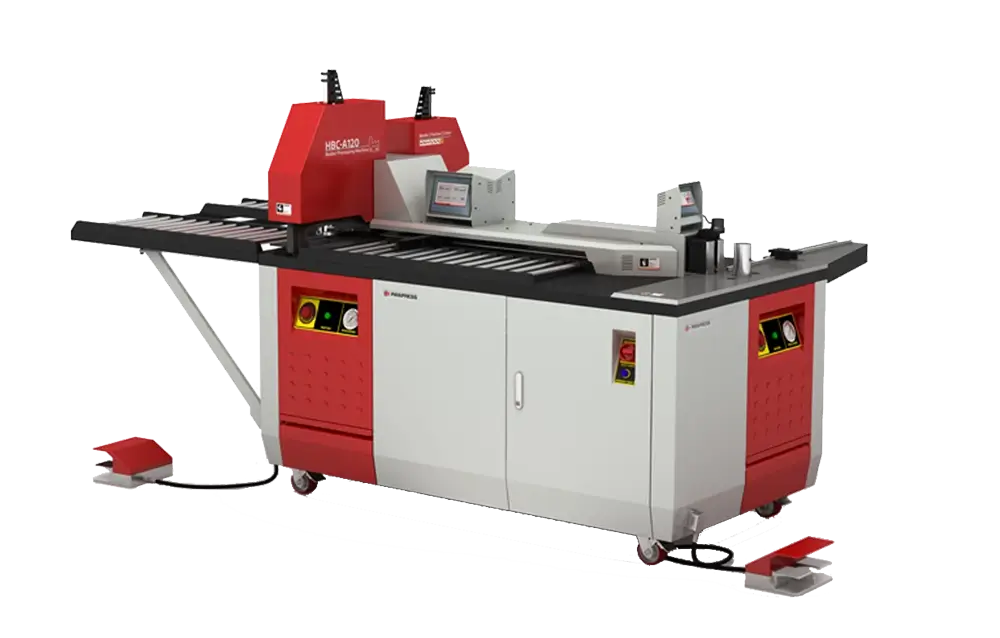
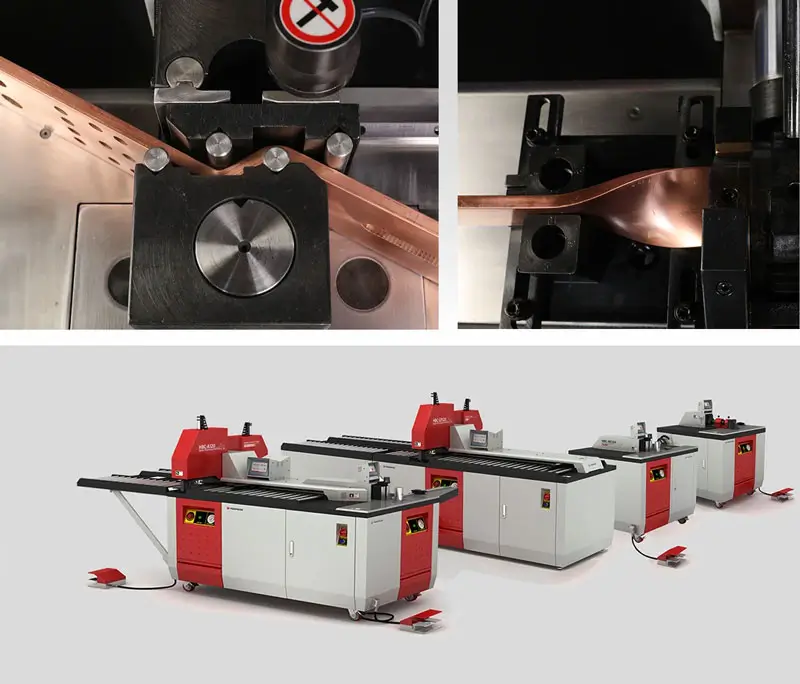
Whichever standard applies, the bus is only as good as its fabrication. Consistent hole patterns, bend radii and joint surfaces keep temperature rise and bracing within tested limits. Panel builders typically cut, punch and bend this copper on a dedicated busbar processing machine. See also how busbar systems inside power switchboards are structured.
Industrial Switchgear vs Panelboard: 6 Differences That Change the Design
Switchgear and panelboards sit at opposite ends of an industrial distribution system. Six differences decide which belongs where:
- Position. Switchgear sits at the service or main distribution level. Panelboards sit at the end of feeders, close to the loads.
- Voltage. UL 67 panelboards are low-voltage equipment. Above 1,000 V you are in medium-voltage switchgear (IEEE C37.20.2 metal-clad or C37.20.3 metal-enclosed interrupter designs), which has no panelboard equivalent.
- Fault duty. Switchgear bus and breakers ride through faults for up to 30 cycles. A panelboard’s SCCR is capped by its lowest-rated breaker and depends on fast clearing.
- Mounting and access. Switchgear is floor-standing and usually rear-accessible. Panelboards are wall-mounted in cabinets and accessible only from the front.
- Maintenance. Switchgear breakers are racked out and serviced. Panelboard breakers are replaced, not repaired, and only with types the panelboard identifies.
- Reconditioning. Since the 2020 NEC, switchboards and switchgear may be reconditioned if the work is listed or field-labeled as reconditioned. Panelboards may not be reconditioned.
Most industrial plants use both: switchgear at the service, panelboards downstream. For medium-voltage designs built to IEC rules, see our IEC 62271-200 internal arc guide.
Breaker Standards Inside Each Assembly: UL 489, UL 1066 and UL 98
- UL 489 covers molded-case circuit breakers, molded-case switches and circuit-breaker enclosures. Insulated-case breakers are also tested to it. These are the standard devices in UL 67 panelboards and most UL 891 switchboards, in residential, commercial and industrial equipment alike. Most are applied at 80% of rating for continuous loads unless marked for 100%.
- UL 1066 covers low-voltage power circuit breakers used in enclosures. They are 100%-rated, maintainable and carry short-time ratings. They are mandatory in UL 1558 switchgear and optional in UL 891 switchboards. Their engineering basis is the IEEE/ANSI family:
- C37.13 for design
- C37.16 for preferred ratings and application
- C37.50 for test procedures
- UL 98 covers enclosed and dead-front switches, fusible and non-fusible. These are disconnect switches, not circuit breakers. Fitted with fuses, they become the fused-switch mains and feeders common in switchboards.
Choose the device family first, and the equipment standard usually follows. For protection philosophy, see our guide to overcurrent protection methods.
Front Access vs Rear Access: Footprint and Working Space
In a front-accessible design, incoming and outgoing field terminations are made from the front, so the lineup can stand against a wall. A rear-accessible design puts those terminations at the back and needs working space behind the equipment. A UL 891 switchboard that requires rear access for field connections must say so on its front.
The footprint gap is real. Eaton, for example, publishes:
- Switchgear: 96 in tall, with a 54 in minimum and 72 in standard depth
- Switchboards: 90 in tall, with an 18 in minimum depth
Panelboards need only wall space and front clearance. Switchboards follow NEMA PB 2 alongside UL 891.
Room layout rules apply to all three:
- NEC 110.26: working space in front of the equipment, and behind it for rear-access gear.
- NEC 110.26(C)(2): equipment rated 1,200 A or more and over 6 ft wide needs an entrance to the working space at each end.
- NEC 110.26(C)(3): where equipment rated 800 A or more has a personnel door within 25 ft of the working space, the door must open in the direction of egress and have listed panic hardware.
- NEC 408.5: conduit stubbed up under a switchboard needs clearance to the bus. UL applies 8 in for insulated bus bars and 10 in for uninsulated.
For dead-front construction and markings, see UL Solutions’ Deadfront Switchboard Application Guide. For cable entry and sizing, see our three-phase power cable guide.
AIC vs SCCR in Panelboards, Switchboards and Switchgear
- AIC (interrupting rating) belongs to a device. It is the highest current, at rated voltage, that a breaker or fuse is intended to interrupt.
- SCCR belongs to the assembly. It is the maximum available fault current the equipment may be connected to, expressed in amperes at a stated voltage.
The rule of thumb “the SCCR can’t exceed the lowest AIC” is close but incomplete. A switchboard’s SCCR is limited by the lowest rating among:
- its connected sections
- its installed breakers and fused switches
- any marked series combination
- any panelboard installed in it
Series ratings let a tested line-side device protect lower-rated load-side breakers, but only in the exact combinations marked on the equipment.
For all three equipment types, NEC 408.6 requires the SCCR to be at least the available fault current. Outside one- and two-family dwellings, the available fault current and the date it was calculated must be field-marked on the enclosure.
For a manufacturer’s view, see Eaton’s AIC vs SCCR explanation.
Selective Coordination: Why Short-Time Ratings Matter
Selective coordination means only the device nearest a fault opens. NEC Articles 700, 701 and 708 require it for emergency, legally required standby and critical operations power systems, and many owners require it everywhere. UL does not evaluate switchboards for system coordination. That is the design engineer’s job.
The equipment choice sets the ceiling:
- Molded-case breakers trip instantaneously on high faults, so two in series can both open.
- UL 1066 power breakers in UL 1558 switchgear can have the instantaneous function turned off and hold for up to 30 cycles, so downstream devices clear first.
- Insulated-case breakers in switchboards sit in between. They offer short-time settings, but within a lower withstand limit, so check the manufacturer’s rating.
The trade-off is arc-flash energy: every intentional delay lets a fault burn longer. Pair short-time settings with an arc energy reduction method. NEC 240.87 requires one for breakers whose trip can be set to 1,200 A or more.
Main-Lug Panelboards and Upstream Protection
A main-lug-only panelboard has no main breaker, so it depends entirely on the upstream device. NEC 408.36 requires every panelboard to be protected on its supply side by an overcurrent device rated no higher than the panelboard. Before relying on that upstream device, check two markings:
- an SCCR that applies only “when protected by” a specific fuse class or breaker
- any series rating that names the line-side device
If the feeder breaker is ever changed, both ratings may stop applying.
Transfer Switches in Panelboards, Switchboards and Switchgear
Transfer switch equipment has its own standard, UL 1008. UL 67 specifically excludes equipment whose only job is transferring load between sources. In practice, transfer switches are integrated into switchboards and switchgear as dedicated sections.
Two details catch specifiers out:
- Emergency marking. A switchboard section itself cannot be marked for emergency use, but an automatic transfer switch inside it can be marked for connection to an emergency source. UL 1558 contains its own provisions for switchgear intended for emergency use.
- Transfer is not always seamless.
- Open-transition switches break before they make, so the load sees a brief interruption.
- Closed-transition switches parallel the sources momentarily, which usually needs utility approval and multiple-source ratings. The 2026 UL 1558 revision updated its multiple-source switchgear requirements.
Service-Entrance Rated Equipment
All three equipment types can be listed for service use. The marking is what counts: “Suitable for use as service equipment” or “Suitable only for use as service equipment.” Service-rated equipment includes:
- the service disconnects
- a main bonding jumper
- a grounding electrode conductor terminal
- in switchboards, barriers that keep line-side bus out of reach while load terminals are serviced
Two NEC rules apply at the service:
- 230.95: on solidly grounded wye systems above 150 V to ground, each disconnect rated 1,000 A or more needs ground-fault protection.
- 110.24: service equipment in other than dwellings needs the available fault current marked.
Choosing the Main Device: Molded-Case, Insulated-Case, Power Breaker or Fused Switch
- UL 489 molded-case main: the lowest cost, common in panelboards and smaller switchboards.
- UL 489 insulated-case main: larger frames and adjustable electronic trips, with drawout versions available. Typical for switchboard mains.
- UL 1066 power circuit breaker: 100%-rated and short-time capable. The standard main in UL 1558 switchgear.
- Fused switch (UL 98 switch with fuses): high interrupting capacity and current limiting. Useful where available fault current is very high.
At 1,200 A and above, plan for arc energy reduction (NEC 240.87). At 1,000 A and above on a 480Y/277 V service, plan for ground-fault protection (NEC 230.95).
NEC Article 408: Installation Rules for All Three
Article 408 covers switchboards, switchgear and panelboards together. The sections that most often decide an inspection are:
- 408.3: service-equipment barriers, and the A-B-C phase arrangement, with the high leg as B phase on 4-wire delta systems.
- 408.4: a legible, specific circuit directory.
- 408.5: clearance between conduit stub-ups and bus.
- 408.6: SCCR at least equal to the available fault current, with that current and its calculation date field-marked.
- 408.8: reconditioning, permitted for switchboards and switchgear when listed or field-labeled as reconditioned, and not for panelboards.
- 408.36 and 408.38: panelboard overcurrent protection and dead-front construction.
Combine these with the Article 110 working-space rules above, and confirm which NEC edition your AHJ enforces. You can read the NEC on NFPA’s free-access page (free account required).
Required Markings: SCCR, Fault Current, Access and Listing
Before energizing, confirm each assembly carries:
- voltage, phase, frequency and ampere ratings for each bus, visible without removing covers
- the SCCR with its voltage, plus any series-rating table
- the field-applied available fault current and calculation date (408.6)
- the 110.24 marking at service equipment
- the arc-flash label required by NEC 110.16
- “Rear access required to make field connections,” where it applies
- the listing mark, verifiable in UL Product iQ under QEUY (panelboards), WEVZ (dead-front switchboards) or WUTZ (low-voltage power circuit breaker switchgear)
On switchboards, each section is also marked with its position, such as “2 of 5.” The listing covers only the sections that carry the mark, and a lineup can ship with unlisted sections, so check every one.
Commissioning and Acceptance Testing
Factory testing differs by standard: UL 1558 requires seven production tests, UL 891 three. Either way, every assembly needs field acceptance testing before energization. ANSI/NETA ATS is the industry reference for that work. It covers:
- visual and mechanical inspection
- bolted-connection torque or resistance checks
- insulation-resistance testing
- trip-unit testing
- verification of settings against the coordination study
Where ground-fault protection is installed on a service, NEC 230.95(C) requires a performance test when the system is first installed, recorded on the manufacturer’s test form.
IEEE C37.13 and C37.16 are breaker design and rating standards, not commissioning procedures. Don’t cite them as the test basis in a commissioning plan.
For grounding checks, see our grounding and earthing system guide.
Arc-Flash Labels After the Coordination Study
Run the arc-flash study after the coordination settings are final, because every short-time delay changes incident energy. Label each assembly under NEC 110.16 and NFPA 70E. Relabel whenever settings, the utility source or the system configuration change.
Switchgear offers the widest mitigation toolkit. Switchboards and panelboards can still use energy-reducing maintenance settings and current-limiting devices.
For label content, see our arc flash label requirements guide.
Cost and Footprint: UL 67 vs UL 891 vs UL 1558
- Panelboards are the lowest-cost way to distribute branch circuits.
- Switchboards cost more but pack many feeders into a compact, front-accessible lineup.
- Switchgear costs significantly more than a switchboard of similar ampacity. The premium pays for power breakers, compartmentalization, a heavier structure and extra testing, and the gear needs a larger room.
| Equipment | Relative cost | Footprint | Best value when |
|---|---|---|---|
| Panelboard (UL 67) | Lowest | Wall space plus front clearance | Branch and small feeder circuits near the loads |
| Switchboard (UL 891) | Mid | Compact; can back onto a wall | Service and distribution where brief outages are tolerable |
| Switchgear (UL 1558) | Highest | Deep, rear access, breaker lifting device | Uptime, coordination and maintainability justify the premium |
Compare total cost of ownership, not purchase price. Maintenance downtime, arc-flash exposure and the cost of an outage often outweigh the equipment price difference.
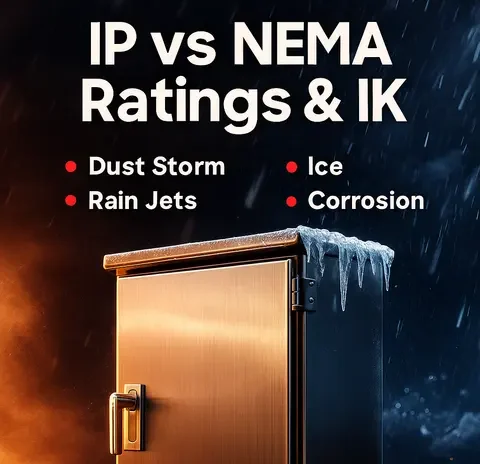
For enclosure protection, see our IP vs NEMA ratings guide.
When to Step Up: Panelboard to Switchboard to Switchgear
Move from panelboards to a switchboard when:
- the service or distribution bus outgrows panelboard ratings
- you need utility metering or several large feeders in one lineup
- adding more wall-mounted boards becomes harder than adding a section
Move from a switchboard to switchgear when the load becomes critical enough to require selective coordination, rack-out maintenance or arc-resistant construction.
Plan any migration around the listing. Added sections and devices must follow the manufacturer’s field-installation markings. Other modifications need a rebuilt-product certification or a field evaluation, and reconditioning follows NEC 408.8.
UL 67 Online and UL 1558 Online: Read the Standards Free
You can read both standards online legitimately. UL Standards & Engagement offers Digital View at ShopULStandards.com, which gives free, view-only access to nearly its full catalog after registration. Search “67” for the panelboard standard (Edition 13) or “1558” for the switchgear standard (Edition 6), and read either in the browser. PDF and print copies are sold on the same site and through the ANSI Webstore.
Two practical notes:
- UL 1558 is written to be used with IEEE C37.20.1 and ANSI C37.51. Those are IEEE/ANSI documents, sold separately, not part of ULSE’s Digital View.
- Sites offering a free “UL 67 PDF” or “UL 1558 PDF” download are not official sources. You cannot confirm the edition or completeness of those files.
For UL 891, see how to read UL 891 online in our switchboard guide. For how these documents relate to one another, see our guide to electrical standards and their hierarchy.
Documents to Request in the Submittal
Ask the vendor for:
- the one-line diagram, elevations and section layout
- nameplate data for every section, including bus ratings and material
- SCCR, series-rating tables and, for switchgear, short-time ratings
- the listing category, file number, and the standard edition the listing references
- breaker time-current curves and trip-unit setting ranges
- production test reports, the O&M manual and torque values
Maintenance and Arc-Flash Mitigation by Equipment Type
Maintenance programs now carry more weight, because NFPA 70B became a standard with enforceable requirements in its 2023 edition. How you maintain depends on the equipment:
- Panelboards: infrared scans, torque checks and exercising breakers. Breakers are replaced, not repaired.
- Switchboards: molded-case breakers are sealed devices, and insulated-case breakers allow only limited maintenance. Work inside a section usually means de-energizing it.
- Switchgear: power breakers are racked out, inspected, tested and returned. Remote racking keeps the technician outside the arc-flash boundary.
Arc-flash mitigation is not exclusive to switchgear. Zone-selective interlocking and energy-reducing maintenance switches are available on electronic-trip breakers in switchboards too. Infrared windows help in both. What switchgear adds is:
- compartmentalization
- arc-quenching devices on some designs
- arc-resistant construction tested to IEEE C37.20.7
Which One to Specify: Typical Projects
- UL 67 panelboards: tenant fit-outs, lighting and receptacle distribution, homes, and small commercial services.
- UL 891 switchboards: retail, offices, hospitality, multifamily buildings and light-industrial services, often feeding panelboards downstream.
- UL 1558 switchgear: hospitals, data centers, airports, stadiums and continuous-process plants. Switchgear sits at the service and main distribution, with switchboards and panelboards further downstream.
The process, not the building type, decides. A plant whose machines can stop briefly is well served by a switchboard. If a fault at one machine must not stop the whole line, specify switchgear at the upstream levels.
For a full selection workflow, see how to choose the right switchgear for your facility.
Conclusion: Match the Standard to the Cost of an Outage
UL 67, UL 891 and UL 1558 are not a good-better-best ladder for the same job.
- A UL 67 panelboard distributes branch and feeder circuits near the loads.
- A UL 891 switchboard delivers dense, economical service and distribution for most commercial and light-industrial buildings.
- UL 1558 switchgear adds 30-cycle withstand, power circuit breakers and compartmentalization for facilities where an outage is unacceptable.
Specify the listing by name, check every SCCR against the available fault current, and choose by what must keep running when a fault hits.

Rate this article
Choose a rating from 1 to 5 stars.
No ratings yet