


If you’d rather listen than read, feel free to play the audio file below for the rest of this article.
What Is a Copper Busbar?
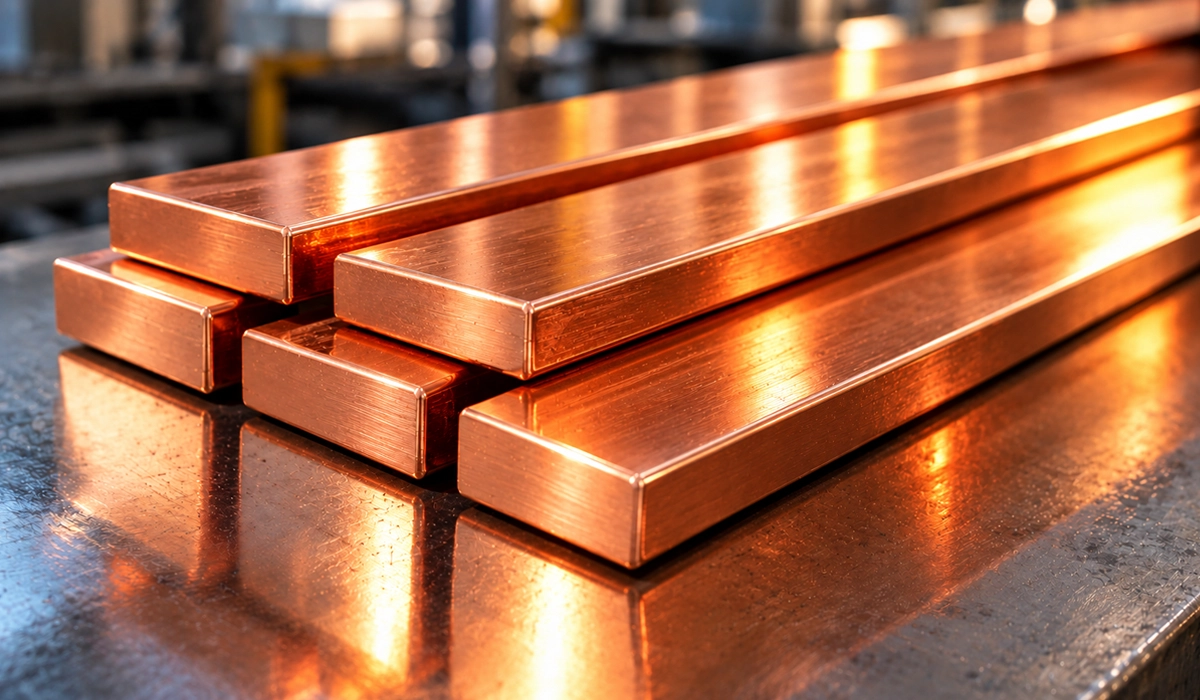
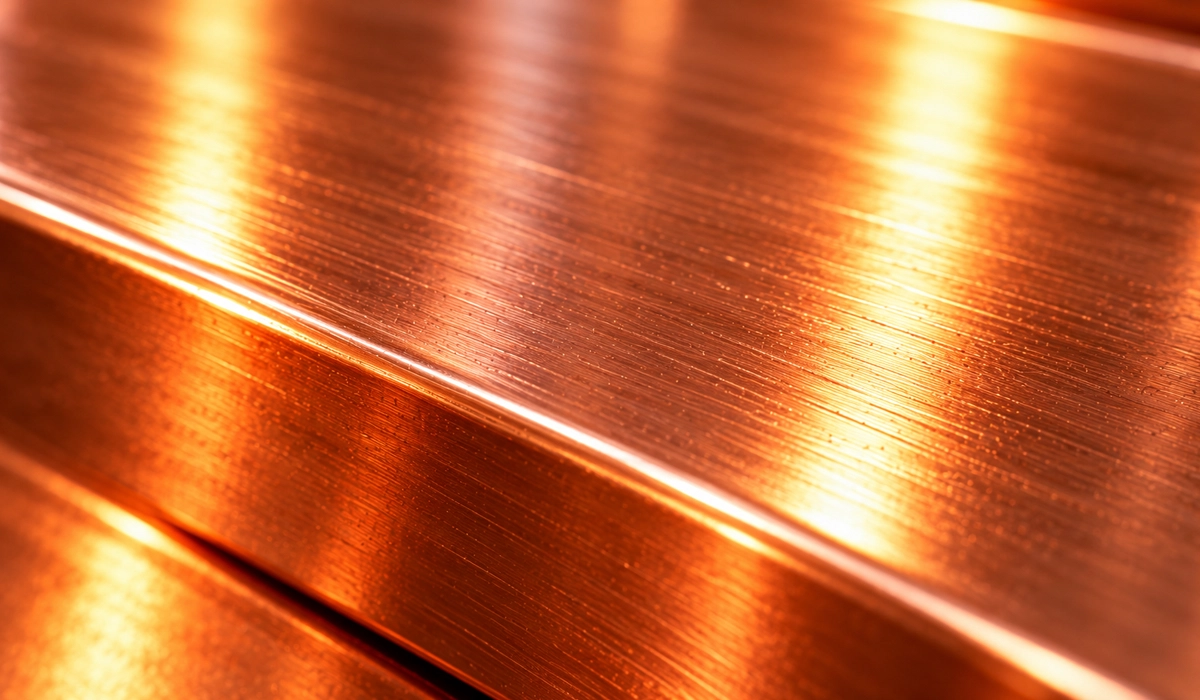
A copper busbar is a solid copper bar or strip that carries and distributes electric current inside switchboards, panelboards, switchgear, busways and battery systems. Installers also spell it copper bus bar; both names mean the same part.
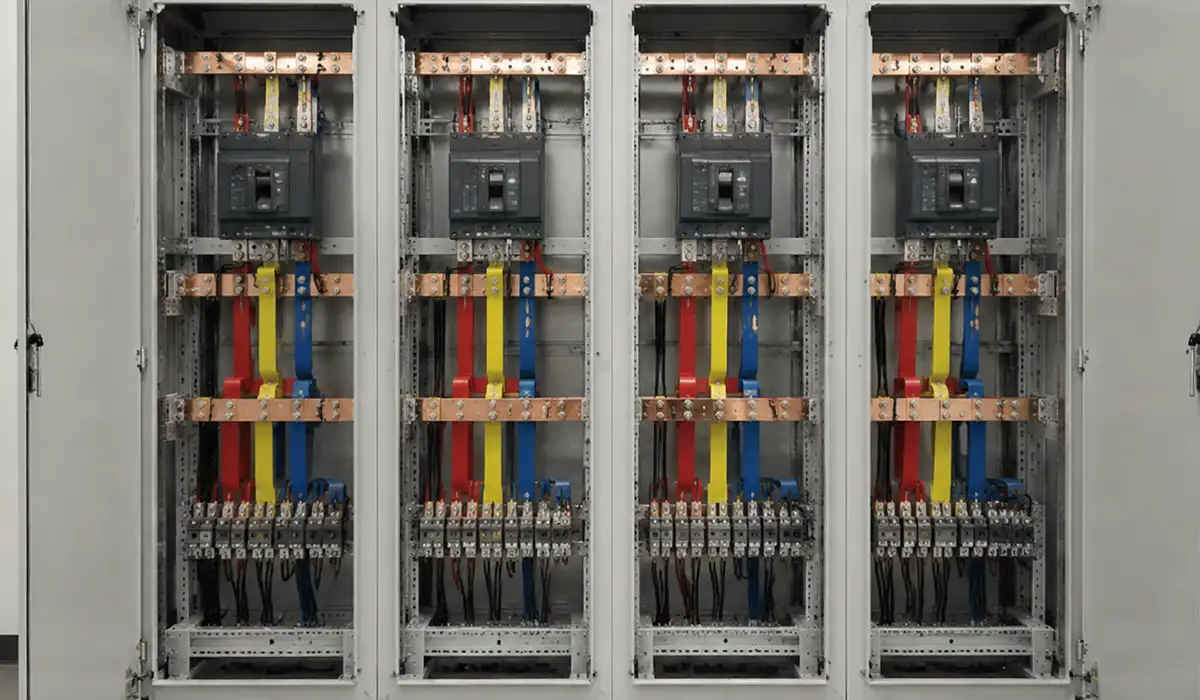
Ask what is copper busbar in a panel shop, and you will hear a simpler answer: the backbone that feeds every breaker. Typical uses include:
- Main and branch bars in switchboards and panelboards
- Phase, neutral and ground bars in switchgear
- Busway and bus duct runs in buildings and plants
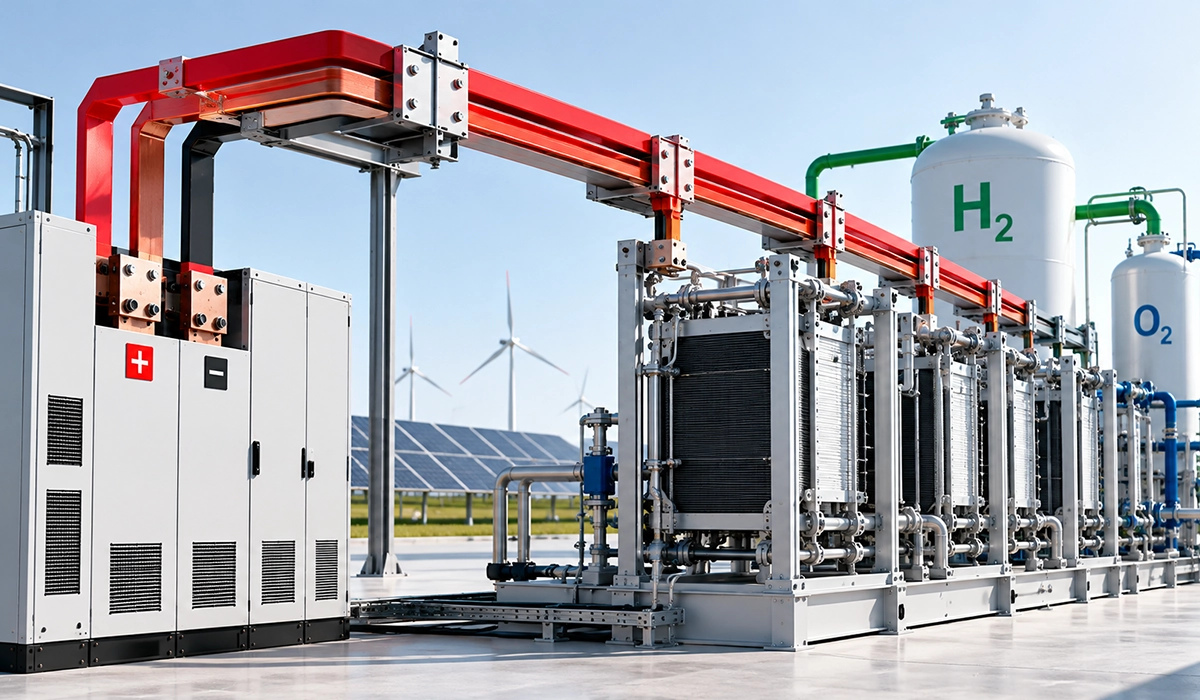
- Battery, UPS and inverter links, including laminated copper busbar packs
- Grounding bars in telecom sites
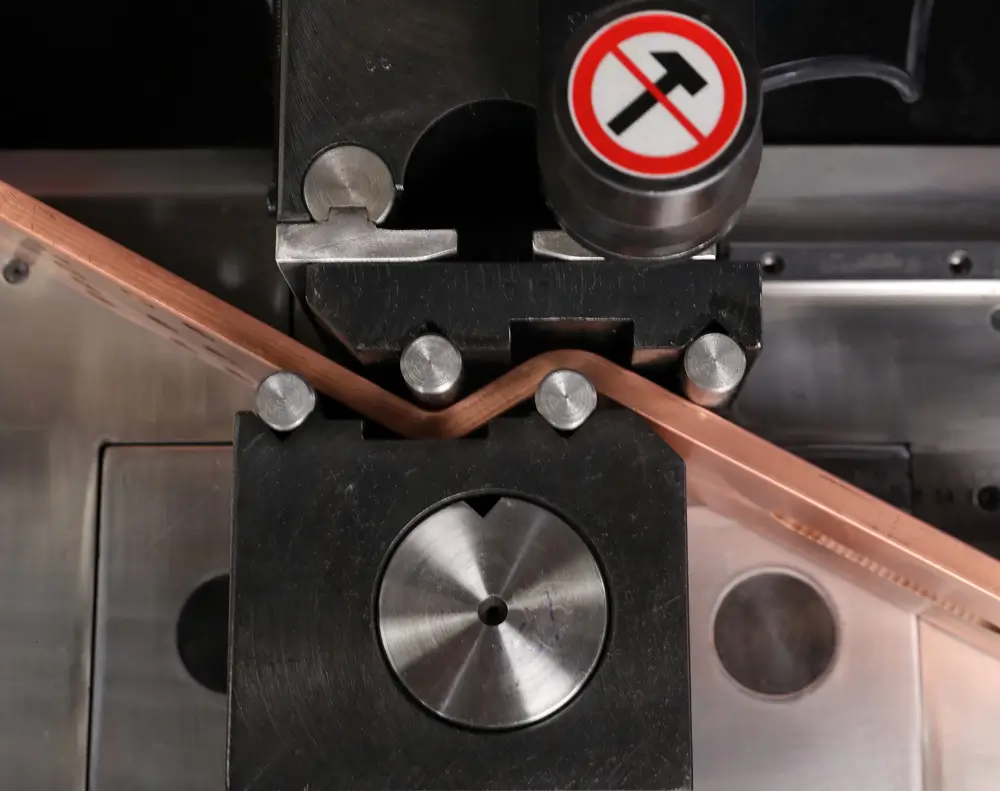
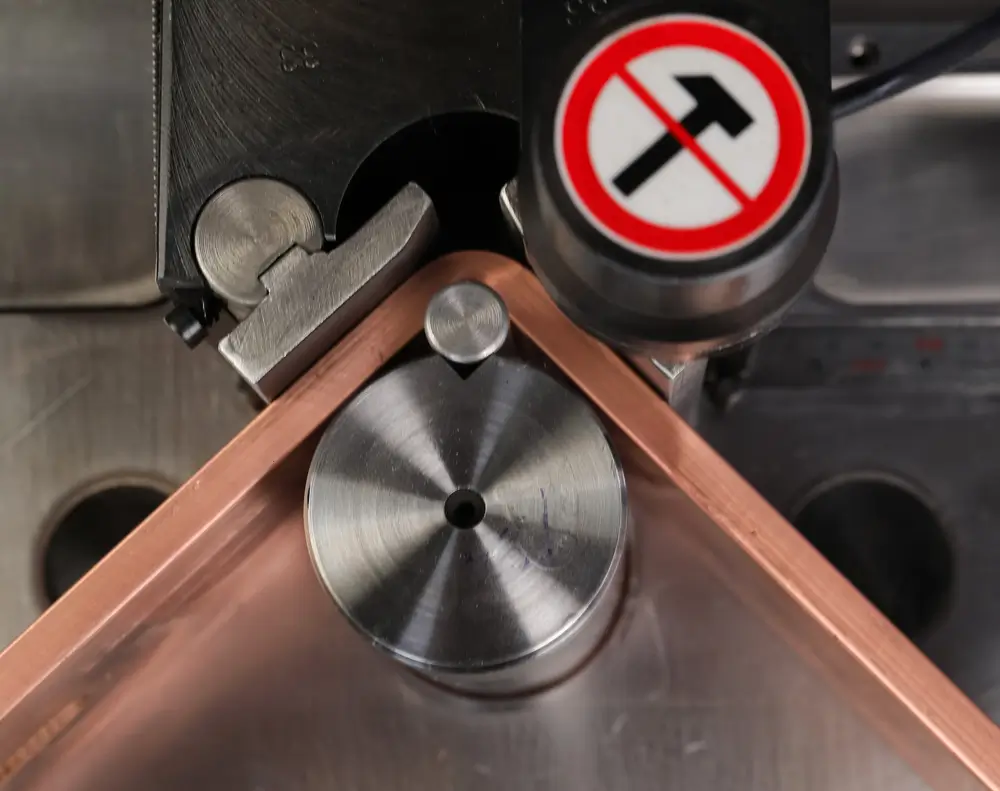
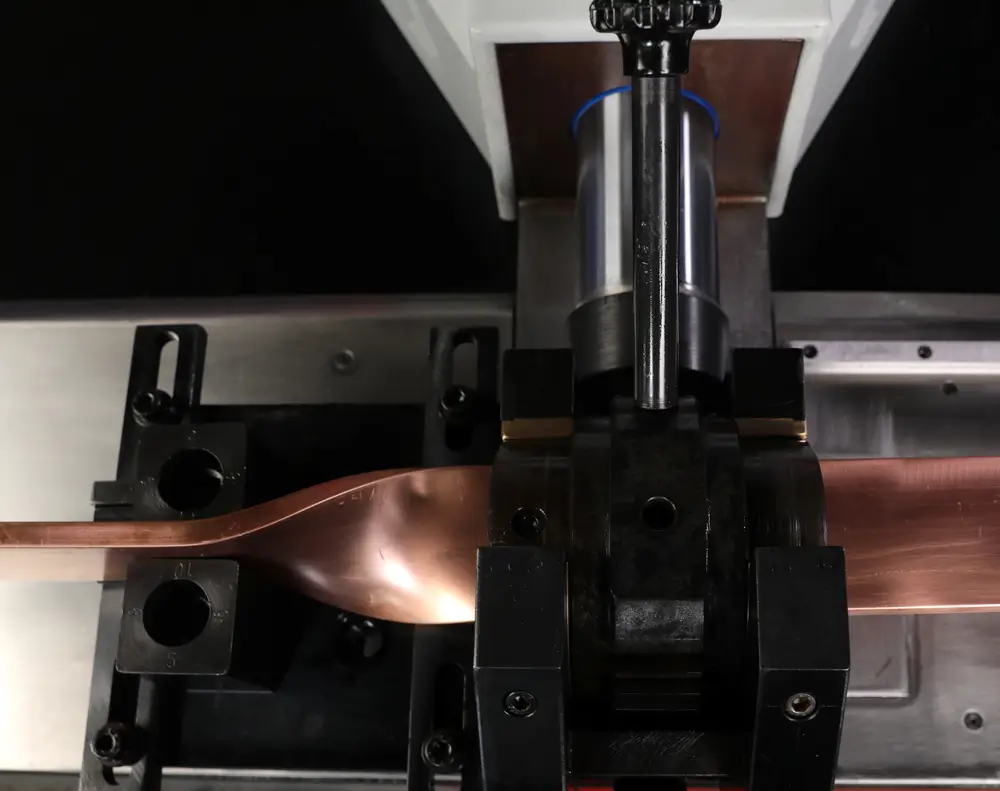
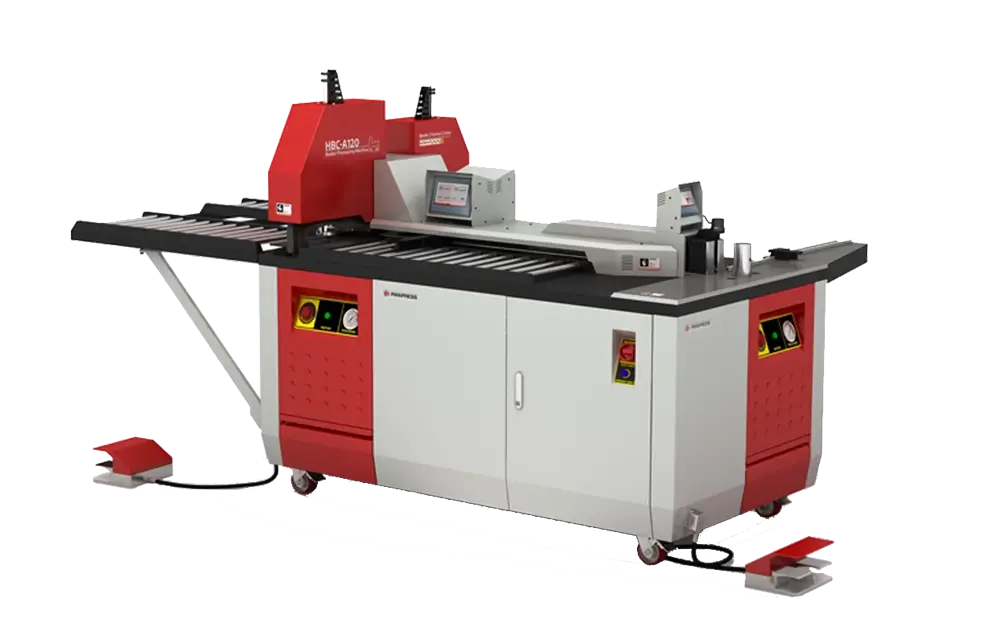
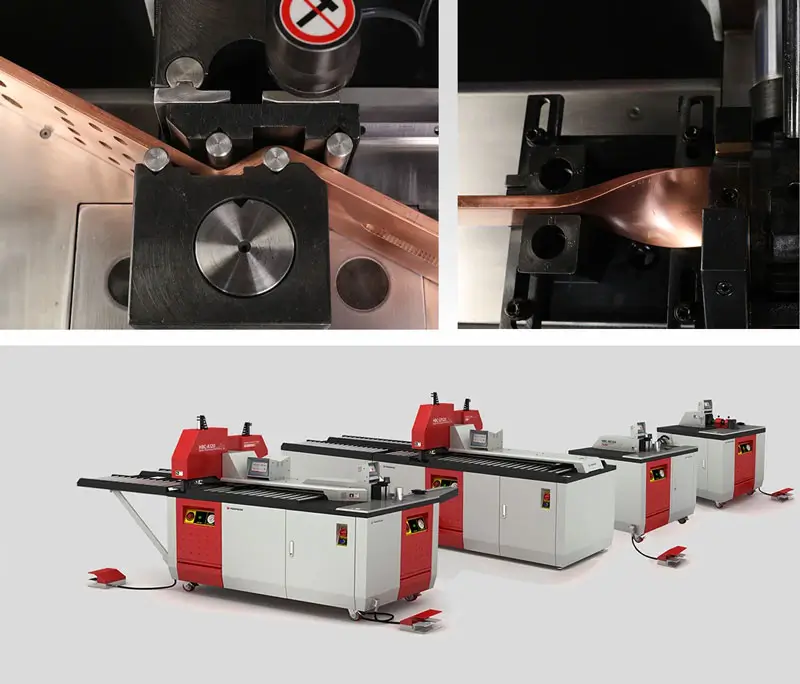
Built for processing larger conductors, the HBC-B200 machine performs cutting, punching, and bending operations on busbars up to 200 × 20 mm. Its sequential operating system is designed for accurate fabrication of heavy-duty electrical connections.
Why Copper: The Core Numbers
The table lists typical copper busbar material values for C11000, the grade most ASTM B187 bus bar uses, and what each number does in a real panel.
| Property | Typical value (C11000) | Why it matters |
|---|---|---|
| Conductivity | 101% IACS | Less heat per amp |
| Resistivity | 1.7241 µΩ·cm defines 100% IACS | Sets voltage drop |
| Density | 0.322 lb/in³ (8.91 g/cm³) | Weight and cost |
| Thermal conductivity | 226 Btu/ft·h·°F (391 W/m·K) | Spreads joint heat |
| Thermal expansion | 9.4 × 10⁻⁶/°F (16.9 × 10⁻⁶/K) | Moves bolted joints |
A copper bar is only one part of the wider system that moves power from the incomer to every load. For busbar types, design and applications across modern facilities, see our guide to electrical busbar systems.
Electrical: Conductivity, Resistivity and %IACS
What is the conductivity of copper busbar? For C11000, the Copper Development Association lists 101 percent IACS at 68 °F (20 °C). The %IACS scale compares any metal with annealed copper, which defines 100 percent: a conductivity of 58.0 MS/m, or a resistivity of 1.7241 µΩ·cm at 20 °C.
Modern refining easily beats that 1913 reference. As a result, electrolytic tough pitch (ETP) and oxygen-free grades meet or exceed 100 to 101 percent. Each extra point means slightly less heat for the same current, which adds up across a long switchboard run.
Impurities work the other way. Even small amounts of phosphorus, iron or other elements scatter electrons and lower conductivity, so bus copper is refined to very high purity. For example, phosphorus-deoxidized copper (C12200) drops to roughly 85 percent IACS, which is why ASTM B187 lists it for general use rather than for bus bar. For the full resistivity story, including temperature and alloy effects, see our copper resistivity guide.
Good busbar design starts with the conductor, so the copper industry publishes its own guidance. The Copper Alliance covers current rating, joints, short-circuit effects and coatings in its busbar design guide.
Mechanical: Tensile Strength, Hardness and Temper
ASTM B187/B187M-26 covers copper bus bar in two tempers: O60 (soft annealed) and H04 (hard). Temper describes how much cold work the bar carries, and it changes strength far more than chemistry does.
The Copper Development Association’s data for C11000 shows the gap. Annealed rod typically reaches about 32 ksi (221 MPa) tensile strength, with a low 10 ksi (69 MPa) yield and 55 percent elongation. Hard (H04) bar and rod typically reach 45 to 48 ksi (310 to 331 MPa) tensile, with yield near 40 to 44 ksi and 16 to 20 percent elongation. These are typical values, not specification minimums, so always check the mill certificate for the bar you buy.
In practice, the copper busbar temper O60 vs H04 choice is a trade-off. Soft bar bends tightly and forgives mistakes, but it dents and sags more easily. Hard bar stays straight and resists dents, because the cold work that adds strength also adds hardness. However, it needs larger bend radii and more press force.
Thermal: Conductivity, Expansion and Temperature Rise
Copper’s high thermal conductivity spreads heat away from hot spots, especially bolted joints, where contact resistance concentrates losses into a small area. Consequently, a copper bar runs more evenly along its length than a poorer conductor would.
Copper busbar thermal expansion matters at every load cycle. At 9.4 × 10⁻⁶ per °F, a 10 ft run that heats up by 90 °F (50 K) grows by about 0.1 in (2.5 mm). That movement pushes on supports and flexes bolted joints each time the load changes, so long runs need expansion joints or flexible links, and supports should let the bar slide.
Temperature rise ties these numbers together. UL 891 for switchboards and IEC 61439-1 for low-voltage assemblies set temperature-rise limits for busbars and terminals. Those limits, not the copper itself, fix the design current. Meanwhile, copper industry ampacity tables list ratings at 30, 50 and 65 °C rise, and they favor 30 °C for energy efficiency.
Density and Weight
Density drives both freight and copper cost, and the weight formula is simple: weight = width × thickness × length × density.
For example, a common 4 × 1/4 in bar has a 1 in² cross-section. At 0.322 lb/in³, each foot (12 in) weighs about 3.9 lb. In metric terms, a 100 × 10 mm bar holds 1,000 cm³ per meter, so it weighs about 8.9 kg/m at 8.91 g/cm³.
Tin plating adds very little weight, so the bare-copper figure is close enough for quotes, stock planning and shipping. For any other width, thickness or length, use our copper weight calculator.
Copper Grades Used for Busbar
ASTM B187 allows more than a dozen coppers for bus applications. In practice, busbar copper in the US usually means C11000 ETP, with oxygen-free copper grades for special cases.
| Grade | Type | Typical busbar use |
|---|---|---|
| C11000 (ETP) | Electrolytic tough pitch, 101% IACS | Most switchboard and panel bars |
| C10200 (OF) | Oxygen-free | Brazed or welded bars |
| C10100 (OFE) | Oxygen-free electronic, highest purity | Vacuum and high-purity uses |
ETP contains a trace of oxygen, so heating it in a hydrogen-rich flame can embrittle it. That is why brazed and welded assemblies often switch to C10200, and why ASTM B187 includes embrittlement among its tests. Bolted panels, by contrast, rarely need anything beyond standard ETP. For a full grade comparison, read our copper grades guide.
The standard names every copper allowed for bus bar, rod and shapes. The ANSI store page lists the covered coppers, from C10100 to C12000, in its ASTM B187 summary.
Grade is only one of the rules a busbar must meet before it goes into a panel. For the main specifications on material, ratings and testing, see our overview of busbar standards.
Ampacity: How Much Current Can a Copper Busbar Carry?
Copper bus bar ampacity has no single answer, because heat, not copper, sets the limit. Five factors decide the rating:
- Cross-section: more copper means less resistance.
- Temperature rise: a 50 °C rise allows more current than 30 °C.
- Enclosure and ventilation: closed panels trap heat and cut the rating.
- Orientation and finish: edgewise bars and painted surfaces shed heat better.
- AC skin effect: alternating current crowds toward the surface, so thick bars gain less than expected.
So, how to calculate current capacity of copper bus bar? Start from a rating table, then derate for enclosure and ambient.
What size copper busbar is required for a 250 amp rating? Example — verify with the rating table: in still air with a 35 °C rise, a 25 × 3 mm (about 1 × 1/8 in) bar rates near 285 A. Inside a closed panel, however, 1.2 to 1.8 A/mm² points to 140 to 210 mm², such as 30 × 5 mm. Use our current rating table and busbar calculator for sizing.
Ampacity tables state their assumptions, which decide whether a rating fits your panel. The Copper Development Association explains its 30, 50 and 65 °C rise basis in its busbar ampacity tables.
Continuous current is only half the sizing story, because fault current also stresses the bar and its supports. Our article explains how peak forces and heating are checked under short-circuit withstand.
Plating: Bare, Tin or Silver
Copper busbar plating protects the contact surfaces, not the whole bar. Bare copper oxidizes in air, and that oxide raises joint resistance over time. A plated surface stays cleaner, and tin also makes copper safer to join with aluminum.
| Finish | Benefit | Watch-out |
|---|---|---|
| Bare | Lowest cost, best for clean dry rooms | Oxidizes; clean before assembly |
| Tin plating | Resists humidity, suits aluminum contact | Soft; wears on sliding contacts |
| Silver plating | Lowest contact resistance at high current | Costly; tarnishes in sulfur-rich air |
When choosing tin plated vs silver plated copper busbar, start with the duty. Tin suits bolted joints in general and humid sites, which covers most industrial panels. Silver, by contrast, suits high-current contacts, plug-in joints and switchgear that must slide or wipe.
Coating standards set thickness classes by severity of service, so plating specs should name one. ASTM’s tin coating standard describes the low contact resistance, corrosion protection and service classes of electroplated tin in its tin coating specification.
Silver deserves a closer look wherever contact resistance must stay as low as possible. Our guide covers its benefits, costs and best uses in detail under silver plated busbar.
Copper vs Aluminum Busbar
The copper vs aluminum busbar choice trades size against weight. Aluminum carries less current per square inch, so it needs a larger bar, but that bar still weighs about half as much.
| Property | Copper (C11000) | Aluminum (1350) |
|---|---|---|
| Conductivity | 101% IACS | About 61–62% IACS |
| Density | 0.322 lb/in³ (8.91 g/cm³) | 0.0975 lb/in³ (2.70 g/cm³) |
| Bar size for same resistance | 1× | About 1.6× |
| Weight for same resistance | 1× | About 0.5× |
| Joint care | Simple; plating optional | Oxide removal, compatible hardware |
| Main cost driver | Metal price | Larger bar and joint labor |
As a result, an aluminum busbar suits large busway and utility runs where weight matters. Copper, in contrast, wins where space is tight and joints must stay trouble-free.
So, are buss bars better than wiring? For high currents, busbars usually beat wiring: they are compact, rigid and easy to tap off.
Aluminum bus conductors follow their own specification, separate from copper. ASTM’s aluminum bus bar standard covers 1350 bars for electrical purposes and requires resistivity and conductivity tests in its aluminum bus specification.
The choice of metal also shapes the final quote for every busbar run. For the factors that drive cost, from metal price to fabrication, see our guide to busbar prices.
What the Numbers Mean on the Shop Floor
The same numbers decide how a bar bends, punches and joins in production.
When a rigid bar cannot bend to fit, a flexible copper busbar or a laminated stack often solves it; see our flexible busbar guide.
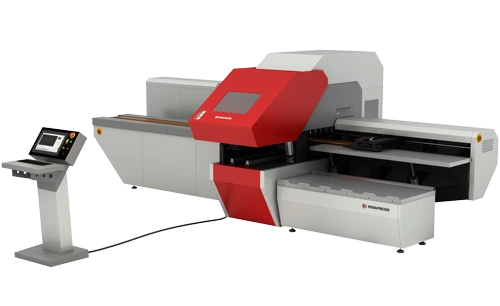
Application engineer’s note: Before quoting a busbar machine, we ask for three numbers: maximum thickness, maximum width and temper. Together they set the force, the tooling and the machine size.
Press force follows a simple rule. The Fabricator explains how perimeter, thickness and shear strength set punching tonnage in its punching force guide.
Accurate bends start with the right flat length, long before the bar reaches the press. Our step-by-step method with bend allowance shows how to calculate busbar bending.
Bending: Temper, Radius and Springback
Temper decides how a bar bends. Soft O60 copper bends around a tight inside radius and holds its shape. Hard H04 copper, by contrast, needs a larger radius to avoid cracking on the outside face, and it springs back more after the press releases.
Bend direction matters too. A flat bend is the easiest, while an edgewise (vertical) bend stretches the outer edge most and is the hardest to do without cracking. Therefore, edgewise bends need wider radii and slower, well-supported tooling.
ASTM B187 includes bend requirements for each temper, so check the mill certificate before setting up. Then compensate for springback by overbending a few degrees and checking the first part against the drawing. Hard bar usually needs more overbend than soft bar, so set it up separately. For minimum radii by thickness, see our guide to busbar bending techniques.
Punching and Cutting: Force and Burr
Punching force follows one formula: force = hole perimeter × bar thickness × shear strength. For example, a 1/2 in hole in a 3/8 in hard bar has a 1.57 in perimeter. At 26 ksi shear strength, it needs about 15,300 lb, or roughly 7.7 US tons. The same hole in annealed bar, at about 22 ksi, needs about 6.5 tons.
Tensile strength tracks shear strength, so harder temper always means more force. It also changes the ideal punch-to-die clearance and the edge quality. Soft copper tends to roll over and leave a larger burr, while hard copper shears cleaner but wears punches and dies faster.
Next, deburr every hole and cut edge, since burrs damage plating, cut insulation and reduce contact area at joints. For tonnage tables and tooling tips, read our busbar punching guide.
Joints: Surface Prep and Torque
A joint is only as good as its contact surfaces. First, clean bare copper just before assembly to remove oxide, and keep contact faces flat so pressure spreads evenly. Tin plating helps here, because it stays clean in storage and humid sites.
Next, hold the clamp force. Thermal expansion moves the joint every time the load changes, so the bolts can loosen over time. Belleville (conical spring) washers keep the pressure steady through those heating and cooling cycles.
Finally, torque every bolt to the manufacturer’s values, not by feel, and mark it once checked. Over-torque can deform soft copper and crush plating, while under-torque raises joint resistance and heat. For cable connections to bars, see our cable lug guide.
Conclusion: Copper Busbar
Five numbers explain electrical copper: 101 percent IACS conductivity, 0.322 lb/in³ density, 9.4 × 10⁻⁶/°F expansion, 32 versus 45-plus ksi tensile strength by temper, and a rating set by temperature rise. Together, they decide how a copper busbar carries current, how much it weighs and how it behaves on the press. Get them right at the design stage, and fabrication and testing go smoothly. For deeper detail, use our weight calculator, resistivity guide, grades guide, punching guide and cable lug guide.
Material numbers are the first step, but the finished bar must also fit the panel with safe spacing. For the minimum distances between phases and to earth, see our guide to busbar clearances.

Rate this article
Choose a rating from 1 to 5 stars.
No ratings yet